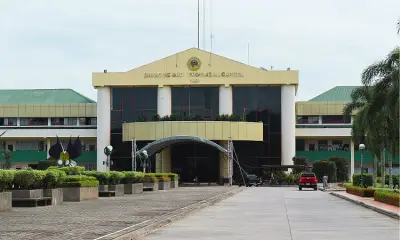
Cebu City Moves to Lower Hospital and Clinic Fees in 2026 Under Proposed Amendment
In a significant development for public healthcare, Cebu City is considering a reduction in rates at its city-owned hospitals and clinics for 2026. This move comes through a proposed amendment aimed at tempering the fee increases that were approved in late 2024, offering a more balanced approach to healthcare costs.
Background on the 2024 Fee Adjustments
The 2024 adjustments, which were authorized by an ordinance from then Councilor Jocelyn Pesquera, were implemented to address rising operational costs and currency fluctuations. At that time, city officials highlighted that many fees had remained stagnant since 2010, when the peso averaged P34.04 to the US dollar, compared to approximately P56.76 in 2024. Increased expenses for medical supplies, equipment, and personnel were also cited as key factors driving the need for higher rates.
Proposed 2026 Rate Structure: A Compromise Solution
Under the new proposal endorsed by City Councilor Michelle Abella-Cellona on January 26, 2026, the fees for 2026 would be set lower than the 2024 rates but higher than the 2010 levels. This rationalized structure is designed to strike a balance between cost recovery for the city and affordability for patients, moving away from outdated benchmarks.

The proposed amendments seek to revise Section 67 of the Omnibus Tax Ordinance, which governs charges at city-operated health facilities, including the City Health Department and Cebu City Medical Center. Among the key reductions in the 2026 schedule compared to the 2024 approved rates are:
- Medical certificates: P50, down from P100
- Dental consultations: P150, from P200
- Urinalysis: P135, from P263
- Complete Blood Count (CBC): P140, from P368
Administrative fees are also adjusted, with retyping of birth or death certificates reduced to P100 from P200. However, death certificates would see a slight increase to P150, while employment and passport certificates remain at P100.
Detailed Fee Reductions Across Services
The proposal includes significant cuts across various medical services to enhance accessibility. For dental services, oral prophylaxis (cleaning) is set at P250, compared to the 2024 rate of P500, while tooth extraction and composite or permanent fillings return to pre-2024 rates of P150 and P275, respectively. Canker sore medication stays at P50.
In imaging and diagnostics, some of the steepest reductions are proposed. A whole abdomen MRI, which cost P32,700 under the 2024 schedule, would be lowered to P15,858, and a brain CT scan would be pegged at P5,000, down from P5,235. Other adjustments include:
- Whole abdomen CT scan: P15,200, down from P16,006
- Standard X-rays: Skull (two views) and pelvis AP revert to pre-2024 rates of P340 and P170
- Barium enema test: P2,000, down from P5,000
Laboratory fees, which saw sharp spikes in 2024, are reduced by 40 to 60 percent for many tests. For instance, a fasting blood sugar test will drop to P120 from P221, and creatinine is proposed at P160, down from P473. Tests for cholesterol and pregnancy are also adjusted to more affordable rates.
Exceptions and Rationale Behind the Changes
Despite these reductions, some hospital and specialized care fees remain high or increase to reflect modern equipment and operational costs. Ambulance transport would rise to P1,000 from P200, ICU room and board is set at P2,500, cardiac monitoring per shift at P800, and oxygen at P70 per hour.
In the explanatory note of the amendments, Councilor Cellona stated, "The proposed rates are reasonable, non-confiscatory, and intended solely to recover costs without unduly burdening the public." She added that the fees would continue to be subject to exemptions, charity classifications, and PhilHealth-related rules, ensuring that vulnerable groups are protected.

Next Steps for the Proposal
The proposed amendment has been endorsed to the Committee on Laws, Styling, and Ordinances and the Committee on Budget and Finance for review and action. This step is crucial for finalizing the changes and implementing them in 2026, potentially bringing relief to many residents seeking affordable healthcare services in Cebu City.