The Department of Agriculture-Davao Region (DA-Davao) is helping Indigenous Peoples (IPs) tap into the growing global market for ube by introducing the high-value crop to farming communities in Davao, where rising international demand is creating new income opportunities.
Through its “Kabuhayan at Kaunlaran ng Kababayang Katutubo (4K) Program,” DA-Davao recently conducted an orientation on ube propagation and crop management for members of the Ata Paraiso Tularo Association (Apata) in Sitio Paraiso, Barangay Tapak, Paquibato District, Davao City. The program aims to equip indigenous farmers with technical skills, quality planting materials, and market access to help them establish sustainable ube production.
Global Demand for Ube
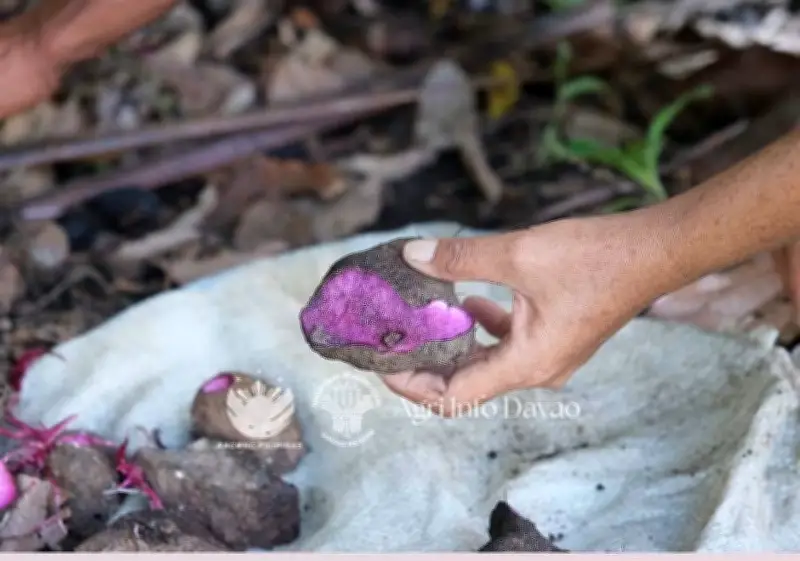
The initiative comes as the Philippines' signature purple yam (Dioscorea alata) continues to gain popularity worldwide. Long used in Filipino favorites such as ube halaya, halo-halo, cakes, and pastries, ube has emerged as one of the country's fastest-growing agricultural exports as more consumers overseas embrace Filipino cuisine and naturally vibrant ingredients. In recent years, international food industry reports have documented ube's growing popularity in the United States, Australia, Canada, the United Kingdom, and other countries.

In the United States, ube has moved beyond Filipino restaurants into mainstream cafés, supermarkets, and dessert chains, where it now appears in lattes, ice cream, doughnuts, cookies, cheesecakes, and specialty drinks. Food analysts attribute its popularity to its naturally vibrant purple color, mildly sweet and nutty flavor, and exposure on social media platforms such as TikTok and Instagram.
Australia has also become a growing market for ube-based products. Cafés and bakeries in Sydney, Melbourne, and other major cities increasingly feature ube in pastries, beverages, and desserts as demand for authentic Asian flavors grows. The country's expanding Filipino community and multicultural food scene have helped transform ube from a niche ethnic ingredient into a mainstream food trend.
Export Growth and Supply Gap
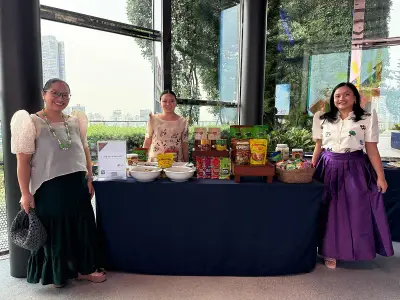
The growing appetite for ube has also boosted export opportunities for the Philippines. According to the Department of Trade and Industry, exports of ube and processed ube products reached about US$3.06 million in 2025, with the United States accounting for more than half of total shipments. Overseas food manufacturers are increasingly using processed products such as frozen ube, ube powder, puree, halaya, and flavoring.
At the same time, rising global demand has tightened domestic supply, prompting government agencies to encourage more farmers to grow ube and expand production areas. The supply gap presents an opportunity for farming communities in Mindanao to enter the export market while increasing household income.
Empowering Indigenous Communities
Recognizing that opportunity, DA-Davao selected Apata as one of the beneficiaries of its livelihood program under the 4K initiative. During the orientation, association members received hands-on training in land preparation, selecting quality planting materials, proper planting techniques, and crop management practices to improve productivity and harvest quality. The activity concluded with a ceremonial planting, marking the establishment of Apata's first ube production area.
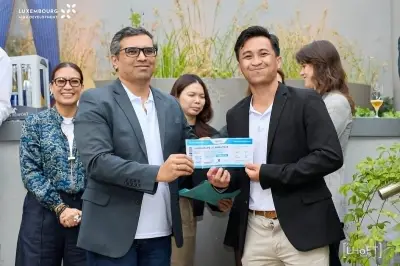
The project is a partnership between the DA-Davao 4K Program and Makati-based Market Reach International Resources, which donated 850 ube planting sets as the association's initial planting materials. Beyond providing inputs, the partnership also gives Apata access to a ready market through the company, offering farmers greater assurance that buyers will purchase their harvest while helping stabilize the supply of ube for both domestic and export markets.
DA-Davao Agriculturist II Crystal Venus Santander said purple yam, locally known as “kinampay” and often called the "Queen of Philippine Yam," is one of the emerging commodities under the High Value Crops Development Program. "With the increasing demand for ube-based products in both local and international markets, DA-11 continues to support Indigenous communities by introducing high-value crops that can improve household incomes while promoting sustainable agriculture," Santander said.

DA-Davao said the 4K Program empowers Indigenous communities by combining technical assistance, quality planting materials, and market partnerships. As global demand for Philippine ube continues to grow, the agency said helping IP farmers enter the high-value crop sector could provide a sustainable source of income while strengthening the country's position as one of the world's leading producers of premium purple yams.