The Davao Public Transport Modernization Project (DPTMP) is set to deploy more than 1,000 modern buses across Davao City, marking a multi-billion-peso initiative to transform the city's transport system into a more efficient, organized, and environmentally sustainable network.
Project Overview
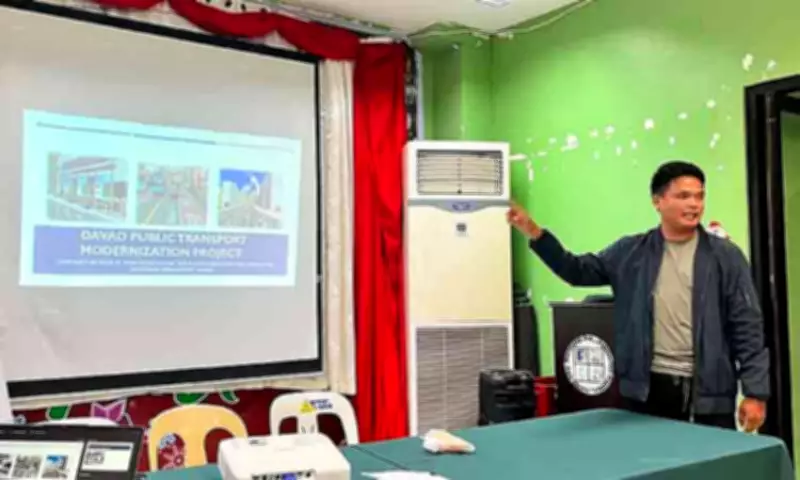
The Department of Transportation (DOTr), in partnership with the Davao City government and funded by the Asian Development Bank (ADB), continues to advance the project through Information, Education, and Communication (IEC) campaigns across the city. On Monday, May 11, 2026, project representatives conducted an IEC session at the Barangay 2-A Hall in Poblacion District to explain the modernization program and its expected impact on commuters, drivers, and operators.
Integrated Bus Network
Under the modernization program, the integrated bus network will serve around 185 barangays and thousands of daily commuters throughout Davao City. Project reports also indicated that approximately 3,000 drivers will be hired to operate the buses, with priority given to affected public utility jeepney (PUJ) drivers.

Richard Villanueva, deputy project manager of DOTr, stated: “If this project is implemented, traditional jeepneys will no longer operate. However, affected drivers will be prioritized for hiring if they still want to continue driving. If not, they may endorse a family member for the position.”
Operational Details
Villanueva explained that bus operations will follow a three-shift system with eight-hour work schedules to ensure continuous transport services throughout the city. The project will introduce four major route categories: Metro Routes, Inter Routes, Feeder Routes, and Local Routes. The network aims to connect urban centers, residential communities, nearby districts, terminals, and transport hubs in Davao City and neighboring areas.
Modern Bus Shelters
According to information presented during the IEC campaign, authorities will also construct modern bus shelters measuring three, six, and nine meters, depending on passenger demand and location requirements. Officials said the bus shelters aim to improve commuter convenience while providing safer loading and unloading areas for passengers.
Dominick Blake Nuevo, CWE Engineer, said: “If this project is implemented in the future, all passengers waiting at bus stops will have designated bus shelters. These shelters will be powered by solar panels, so at night they will be well-lit, making the waiting passengers more visible and safe. That is why the bus shelters are also environmentally friendly.”
Social Development Program
One of the project’s major components is the Social Development Program, which seeks to assist PUJ drivers, operators, and workers who may be affected by the transition to a bus-based transport system. The program includes financial and non-financial assistance for affected stakeholders.
Non-financial assistance, expected to begin in the fourth quarter of 2025, includes livelihood support, skills training, and educational assistance. Meanwhile, financial assistance is scheduled for rollout by the third quarter of 2027. Affected drivers may receive up to P80,000 in assistance, while operators may receive P100,000 per PUJ unit. Operator-drivers may receive up to P180,000 under the assistance program.
Long-term Vision
DOTr officials previously emphasized that the project is not simply about replacing jeepneys with buses, but about creating a more reliable, organized, and sustainable transportation system for Davao City.