The Metropolitan Cebu Water District (MCWD) is pursuing a financial turnaround after suffering heavy losses due to expensive bulk water purchases, aging pipes with numerous leaks, and a widening gap between water production costs and consumer prices.
New Chairman's Recovery Strategy
Ruben Almendras, the new board chairman of MCWD, is driving an aggressive recovery strategy focused on reducing non-revenue water (NRW), streamlining cash flow, and securing additional water sources before the expected El Nino drought.
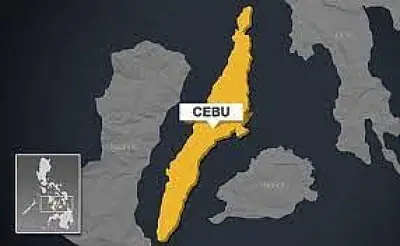
For ordinary consumers, the issue is not just about billing. The financial stability of MCWD directly affects whether households in Metro Cebu will still receive water during the dry season, and whether the utility can maintain infrastructure in one of the fastest-growing urban regions in the country.

"I told the board, we are going to make money this year, profitable this year. Our problem now is how to overcome our P760 million loss in 2025," Almendras said.
Causes of Financial Distress
MCWD's financial difficulties coincide with the ongoing water shortage in Metro Cebu due to rapid urbanization, population growth, declining groundwater levels, and climate change-induced droughts. For many years, the utility relied heavily on groundwater wells and surface water sources such as Buhisan and Mananga. However, due to recurring droughts and increasing demand, the water district was forced to rely on private bulk water suppliers from desalination plants and surface water, which are more expensive than water sourced by MCWD itself.
According to Almendras, this imbalance was one of the reasons for the utility's financial collapse. "In 2025, the average selling price per cubic meter was lower than the average cost of the water," he told SunStar Cebu. He explained that more than half of the water sold by MCWD came from bulk suppliers, while cheaper in-house groundwater and surface water sources could no longer meet demand. The result was a loss for the utility while it continued to supply water to hundreds of thousands of consumers.
Financial Decline
Based on Commission on Audit (COA) records, MCWD's net income dropped from P48.52 million in 2023 to just P5.13 million in 2024. Auditors also noted increasing debt and operational costs due to pipe leaks. Despite the losses, Almendras said MCWD still has sufficient assets to recover, with support from Landbank and the Development Bank of the Philippines. The utility aims to recover the P760 million deficit within two to three years.
Immediate Measures
One approach is to revise payment terms with suppliers, extending from 30 days to 90 days. This has freed up approximately P100 million per month for operations. However, the centerpiece of their efforts is reducing NRW—water that is produced but not paid for due to leaks, illegal connections, or broken meters. NRW was previously at 32 percent, meaning nearly a third of water was wasted and did not generate revenue. Currently, it has been reduced to 29 percent as of March, with a target of 25 percent by the end of the year and below 20 percent in the future.
Preparing for El Nino
The recovery effort coincides with Metro Cebu's preparation for a possible drought. According to Pagasa, there is a 79 percent probability that El Nino will emerge in late 2026 to early 2027. MCWD estimates the drought could result in a daily water shortage of 43,000 cubic meters. To counter this, the water district is identifying projects such as drilling new wells, expanding desalination facilities, and completing the pipeline connection to the Vivant Water desalination plant in Cordova.
Almendras said that Lapu-Lapu City Mayor Cindi King-Chan and Rep. Ahong Chan have promised to release permits for pipe digging after the ASEAN meetings in May. Once operational, this is expected to provide an additional 20 million liters of water per day to Metro Cebu.
For now, Almendras is confident that stricter financial management, reduction of water waste (NRW), and securing additional water sources will save MCWD from collapse.