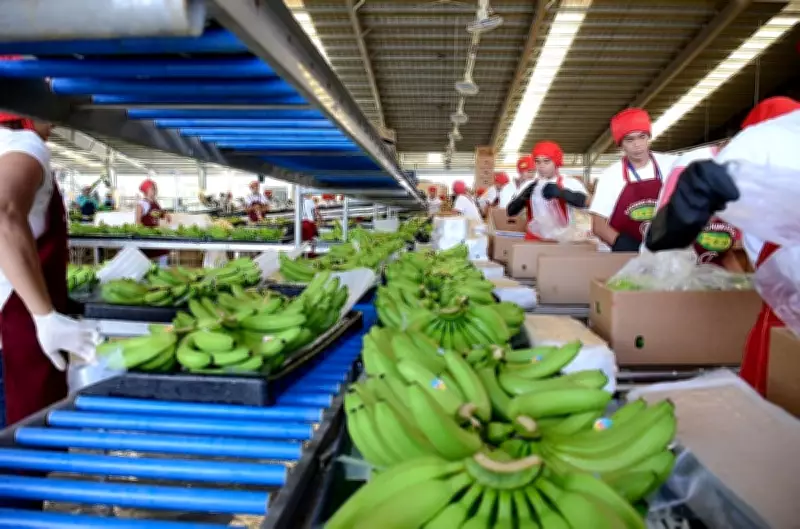
Philippines Regains Status as World's Second-Largest Banana Exporter
The Philippines has successfully reclaimed its position as the world's second-largest banana exporter in 2025, marking a significant recovery for the agricultural sector. According to preliminary data from the Food and Agriculture Organization (FAO), the country's banana shipments climbed to an impressive 2.925 million metric tons last year, representing a substantial 26 percent year-on-year increase.
Restoring Global Standing After Years of Decline
This achievement restores the Philippines' 2020 ranking and reverses the concerning decline in export volumes that occurred from 2021 to 2024. The sector had been struggling with multiple challenges during those years, including disruptive pest infestations and adverse weather conditions that severely constrained both production capabilities and international trade activities. The recent performance growth has enabled the country to surpass Colombia while simultaneously widening its lead over other major banana-exporting nations such as Costa Rica and Guatemala.
Government Support and Industry Resilience
Department of Trade and Industry (DTI) Secretary Cristina A. Roque emphasized that this renewed global standing reflects both the remarkable resilience of the banana industry and the positive impact of sustained government policy support under President Ferdinand R. Marcos Jr.'s administration. "Reclaiming second place globally underscores the resilience of our farmers and the strength of our trade strategy," Secretary Roque stated. "With this, the DTI remains committed to sustaining this momentum through industry upgrading, investment promotion, and deeper integration into global value chains to strengthen the sector's long-term competitiveness."

The DTI chief further explained that through various government programs, the department continues to support the banana industry alongside other agricultural products to enhance their export readiness and market potential.
Strategic Trade Agreements Driving Growth
Critical pillars supporting this export resurgence include the strategic utilization of major international trade agreements:
- Regional Comprehensive Economic Partnership (RCEP): This comprehensive trade pact has significantly lowered or eliminated tariffs for Philippine bananas in key Asian markets.
- Philippines-South Korea Free Trade Agreement (FTA): This bilateral agreement has provided Philippine bananas with a distinct price advantage in the South Korean market.
These agreements have created favorable conditions for Philippine banana exporters to compete more effectively in international markets by reducing trade barriers and improving market access.
Expanding Support Programs for Exporters
The DTI has implemented several strategic initiatives to support the banana industry's continued growth:
- Export-Oriented Enterprise (EOE) Certifications: The DTI's Export Marketing Bureau (EMB) has expanded its support by issuing EOE Certifications to qualified banana exporters. These certifications enable firms to source key production inputs at more competitive prices, effectively lowering overall operational costs while simultaneously improving product quality.
- Doing Business in Free Trade Areas (DBFTA) Seminars: The EMB is actively conducting educational seminars to help farmers and exporters better utilize Certificates of Origin for zero-tariff entries under various free trade agreements.
- Replication Strategy for Other Crops: The DTI is aggressively working to replicate this success for other high-value agricultural products, including mangoes and ube, to diversify the country's agricultural export portfolio.
Economic Impact and Future Outlook
The banana industry's renewed global standing carries significant economic implications for the Philippines. As a major source of rural employment and foreign exchange earnings, the sector's recovery strengthens rural livelihoods across banana-producing regions. By restoring its competitiveness on the world stage, the Philippines reinforces its credibility as a reliable agricultural exporter while contributing to national economic stability.

Despite these positive developments, industry observers note that exporters continue to face challenges, particularly increasing operational costs that may offset some benefits from the export growth. The DTI acknowledges these concerns and remains focused on implementing measures to enhance the sector's long-term sustainability and global market position.