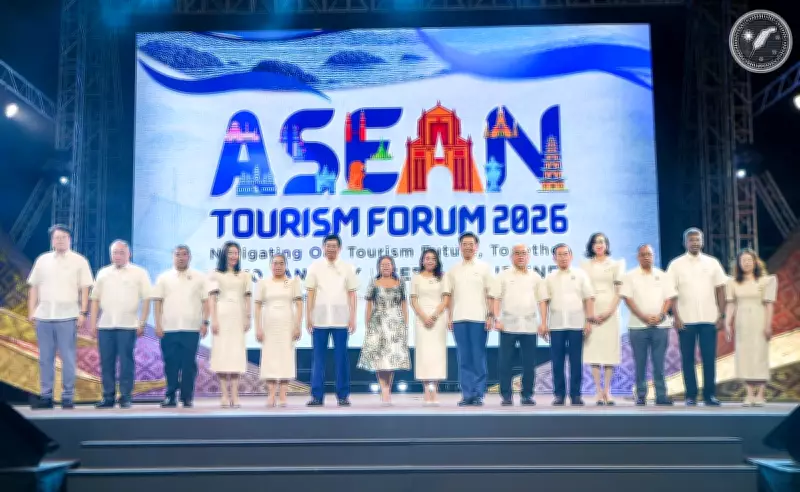
President Marcos Launches ASEAN Tourism Forum 2026 in Cebu with Focus on Sustainable Tourism
President Ferdinand R. Marcos Jr. officially inaugurated the Association of Southeast Asian Nations (ASEAN) Tourism Forum 2026 in Cebu City on Wednesday, reinforcing the Philippines' dedication to fostering sustainable, inclusive, and innovative tourism as a pivotal catalyst for regional economic growth and collaboration.
Historic Milestone for ASEAN Tourism
In his address delivered by Department of Tourism Secretary Christina Garcia Frasco, President Marcos highlighted the significance of this year's forum, noting that it commemorates the 45th anniversary since its inception in 1981. He expressed a strong sense of confidence and optimism about the future of ASEAN tourism, urging participants to translate discussions into actionable outcomes that yield lasting benefits for the people across the region.
"I share with you the sense of confidence and optimism that ASEAN tourism will continue to thrive. Let our discussions lead to actions. Our cooperation brings lasting benefit to our people," the President stated during the opening ceremony.

Tourism as a Cultural and Economic Bridge
President Marcos emphasized that in ASEAN, tourism transcends mere industry status, serving as a vital bridge between diverse cultures, a pathway that connects communities, and a unifying force for the region. He proudly welcomed delegates to the Philippines, underscoring Cebu's role as the host city for this prestigious event.
"It is a bridge between our cultures, a pathway connecting our people, and a force that brings our region together. It is therefore with great pride that the Philippines hosts you today at the ASEAN Tourism Forum 2026 here in Cebu," he continued.
Boosting Local Communities and Regional Leadership
The President pointed out that in the Philippines, tourism has a profound impact on uplifting not only popular destinations but also the livelihoods of local populations. It supports a wide array of sectors, including:
- Filipino farmers and fisherfolk
- Creative industries and artists
- Transportation and hospitality service providers
- Entrepreneurs and small businesses
He stressed the importance of ensuring that local communities reap tangible benefits from showcasing their heritage and unique cultural identities, a principle that resonates throughout the ASEAN region. As the current ASEAN Chair, the Philippines is committed to advancing the collective interests of member states and steering the region toward shared prosperity and sustainable development.