The House of Representatives has approved on third reading a landmark measure that will provide free professional and civil service examinations to economically disadvantaged Filipinos. House Bill 8869, known as the "Free Professional Examinations Act," was passed on May 20, 2026, with Davao City 2nd District Representative Omar Vincent S. Duterte as its principal author.
What the Bill Covers
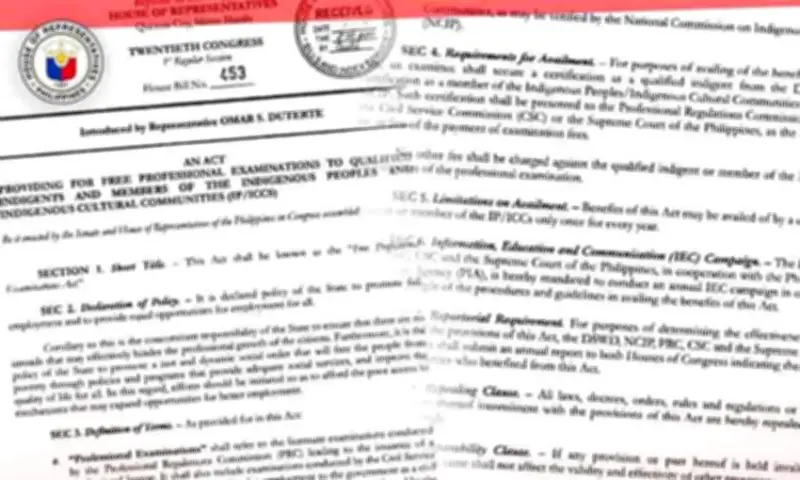
The substitute bill consolidates House Bill No. 453 and seeks to waive examination fees for qualified indigent Filipinos and members of Indigenous Peoples and indigenous cultural communities (IP/ICCs). Specifically, the measure covers:
- Professional licensure examinations administered by the Professional Regulation Commission (PRC);
- Civil Service Commission (CSC) examinations required for government eligibility; and
- The Bar Examinations conducted by the Supreme Court of the Philippines.
Removing Financial Barriers
Lawmakers recognized that examination fees often prevent deserving graduates and job seekers from advancing their careers. By eliminating these costs, the bill aims to promote social mobility and ensure that talent, competence, and determination—not economic status—determine an individual's ability to enter a profession or pursue public service.

For many aspiring teachers, nurses, engineers, accountants, social workers, agriculturists, and other professionals, examination fees pose a substantial challenge, particularly for those from low-income families and remote communities. The legislation seeks to ensure that qualified graduates are not denied professional licenses simply because they cannot afford the costs.
Inclusivity and Nation-Building
Members of Indigenous Peoples and Indigenous Cultural Communities will also benefit from the measure, reinforcing the government's commitment to inclusivity and equal access to education and employment. Beyond financial relief, the proposed law is expected to contribute to nation-building by increasing the number of licensed professionals and qualified government workers, especially from underserved sectors.
The bill is also seen as an investment in human capital, helping unlock the potential of talented Filipinos who may otherwise be left behind due to economic constraints. The passage on third reading marks a significant legislative milestone and underscores the House's commitment to making professional advancement more accessible to all Filipinos, regardless of social or economic background.
If enacted into law, the Free Professional Examinations Act will serve as a transformative measure that opens doors for thousands of aspiring professionals, strengthens workforce development, and advances the constitutional mandate of providing equal opportunities for employment and public service to every Filipino.