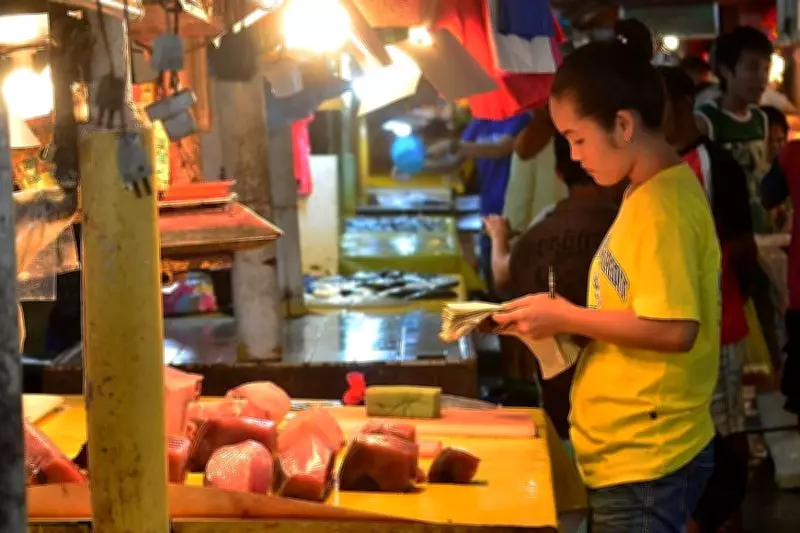
DAVAO. According to the Philippine Statistics Authority, fish was among the selected food items that experienced a significant price spike, contributing to the soaring inflation rate in the Davao Region during December 2019. This historical data highlights regional economic pressures that have since evolved at the national level.
National Food Inflation Shows Encouraging Slowdown in Early 2026
MANILA — Food inflation slowed down noticeably in January 2026, helping to keep the country's overall inflation rate manageable and within the government's target range as the new year commenced. This development was reported by the Department of Economy, Planning, and Development (DepDev), indicating a positive shift from past trends like those observed in Davao.
The Philippine Statistics Authority disclosed today that headline inflation reached 2.0 percent in January 2026, marking a slight increase from the 1.8 percent recorded in December 2025. This uptick was primarily driven by a rise in non-food inflation, which climbed to 2.5 percent from 2.0 percent over the same period.

Significant Drop in Food Price Increases
Despite the overall inflation increase, food inflation decelerated substantially to 0.7 percent in January 2026, down from 1.2 percent in December 2025. This slowdown is particularly beneficial for Filipino households, especially lower-income families who allocate a larger portion of their expenditures to food items.
Rosemarie G. Edillon, Undersecretary of DepDev and currently serving as Officer in Charge while Secretary Arsenio M. Balisacan is abroad on official business, emphasized the importance of this trend. "We see the easing of food inflation as beneficial for Filipino households, particularly for lower-income families where food accounts for a larger share of expenditures," she stated.
The government remains committed to its inflation target range of 2–4 percent for both 2026 and 2027, while maintaining vigilance against potential upside risks that could emerge. "We will continue building on this progress by sustaining efforts to support Filipino families' purchasing power, alongside other reforms that strengthen resilience and promote long-term growth," Edillon added.
Key Drivers Behind the Food Inflation Slowdown
The deceleration in food inflation was largely propelled by slower price increases in several essential categories:
- Vegetables, fish, and meat showed moderated price growth
- Pork prices slowed dramatically to 0.5 percent from 4.8 percent
- Chicken prices eased slightly to 0.6 percent from 0.7 percent
- Beef prices decreased to 4.6 percent from 5.5 percent
Edillon explained these improvements: "Fewer areas were affected by African Swine Flu cases, while faster withdrawals from cold storage facilities helped temper both pork and chicken price increases." This demonstrates how supply chain efficiencies and disease management can positively impact food costs.
Non-Food Inflation Presents Ongoing Challenges
While food inflation showed improvement, several non-food sectors experienced accelerated price increases in January 2026 compared to December 2025:
- Housing rentals increased to 2.8 percent from 2.4 percent
- Electricity costs rose significantly to 6.5 percent from 4.1 percent
- Food and beverage services accelerated to 4.0 percent from 2.5 percent
Government Initiatives to Address Energy Sector Inflation
To combat the rising non-food inflation, particularly in the energy sector, the government has implemented several policy measures:
First, the Department of Energy is enhancing the Net Metering Program through streamlined implementation. This includes enforcing time-bound local permitting processes, simplifying utility documentary requirements, and expanding consumer incentives. The program enables consumers to install eligible renewable energy systems and export surplus electricity to the grid, ultimately helping to lower electricity costs and support the nation's energy transition.

Second, the Energy Regulatory Commission (ERC) has adopted a uniform lifeline consumption threshold of 0–50 kWh. This policy grants qualified customers a 100-percent discount on applicable electricity charges. Additionally, the ERC approved a uniform lifeline subsidy rate of P 0.01 per kWh to provide equitable discounts for marginalized and low-income households across the Philippines.
Edillon concluded with assurance: "Rest assured that we are exerting all efforts to strengthen food systems, improve climate resilience, and enhance governance to further support price stability and help sustain economic momentum in the months ahead." These comprehensive approaches aim to balance the economic landscape, addressing both historical regional issues like Davao's 2019 fish price spikes and current national inflation trends.