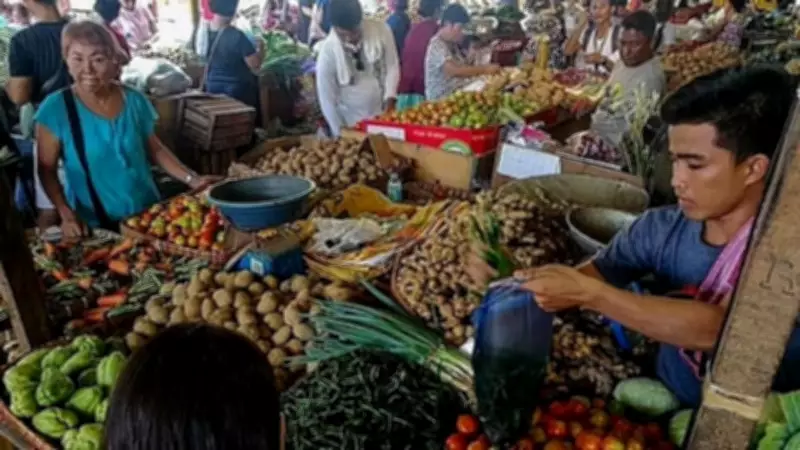
The Philippines experienced a significant surge in inflation during March 2026, with the rate climbing sharply to 4.1 percent, according to the latest data from the Philippine Statistics Authority (PSA). This acceleration is nearly double the 2.4 percent inflation recorded in February 2026, highlighting a rapid increase in consumer prices that has placed additional pressure on Filipino households.
Key Drivers of Inflationary Pressure
The PSA attributed the March spike primarily to a dramatic reversal in transport costs, which posted a 9.9 percent annual increase after a 0.3 percent decline in February. This surge is closely tied to rising fuel prices resulting from ongoing conflicts in the Middle East, which have disrupted global energy markets.
Food prices also played a crucial role, with the food and non-alcoholic beverages index rising to 3.0 percent, up from 1.8 percent in the previous month. At the national level, food inflation increased to 2.8 percent in March, driven largely by a 3.6 percent rise in rice prices—a notable rebound from a 3.4 percent decline in February.

Sectoral Contributions to Inflation
The PSA identified three major contributors to the March inflation rate, which together accounted for the bulk of inflationary pressure:
- Food and non-alcoholic beverages — 28.2 percent share (1.2 percentage points)
- Housing and utilities — 22.5 percent share (0.9 percentage point)
- Transport — 22.1 percent share (0.9 percentage point)
Other sectors that registered faster price increases include housing, water, electricity, gas, and other fuels at 4.5 percent; restaurants and accommodation services at 5.0 percent; recreation, sport and culture at 4.7 percent; alcoholic beverages and tobacco at 3.7 percent; and health at 3.4 percent.
Government Response and Mitigation Measures
In response to the inflationary pressures, the Department of Economy Planning and Development (DepDev) has outlined a series of strategic interventions aimed at mitigating the impact on households and key economic sectors. DepDev Secretary Arsenio Balisacan emphasized the government's commitment to deploying timely and tangible solutions.
Key measures include:
- Activation of an emergency fuel procurement program, with 165.6 million liters of diesel secured for delivery through April to stabilize domestic fuel supply and ease transport costs.
- Implementation of toll rebates for public utility vehicles and cargo trucks on major expressways.
- Strengthened anti-hoarding guidelines to prevent artificial fuel shortages and maintain orderly distribution.
- Targeted assistance to vulnerable sectors, such as public utility vehicle drivers, farmers, and fisherfolk, through service contracting, cash assistance, and fuel subsidies.
Long-Term Economic Resilience
Secretary Balisacan highlighted the operationalization of Executive Order 110, which establishes the Unified Package for Livelihoods, Industry, Food and Transport (Uplift) Committee. This committee aims to help the government identify strategic measures to balance short-term relief with longer-term economic recovery.
"Our immediate priority is to ensure the safety of Filipinos abroad and to deploy timely and tangible solutions by providing critical support for the transport sector, commuters and industries, while simultaneously diversifying the energy mix," Balisacan stated.
He added, "The government is firmly committed to ensuring the continuous delivery of services, even as we pursue decisive measures to enhance the resilience of our economy and institutions, carefully balancing short-term relief measures and longer-term considerations toward enabling the economy to recover high growth quickly."
The first-quarter average inflation for 2026 now stands at 2.8 percent, significantly higher than the 1.8 percent recorded in March 2025, underscoring the ongoing challenges posed by external economic shocks and domestic price dynamics.