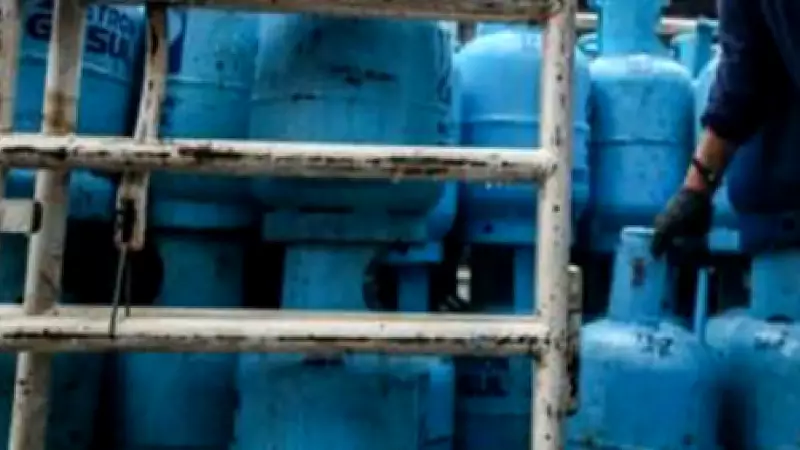
The cost of liquefied petroleum gas (LPG) in the Philippines has risen today, marking the start of a staggered price adjustment aimed at softening the financial blow for consumers. According to Arnel Ty, President of the LPG Marketers’ Association (LPGMA), the increase has been implemented in two tranches, each adding P10 per kilogram of LPG, with the first phase taking effect on April 1.
Details of the Price Adjustment
Effective immediately, the initial hike adds P5 per kilogram, translating to an extra P55 for every standard 11-kilogram household LPG cylinder. This move is part of a broader strategy to prevent sudden shocks to household budgets. The second phase is scheduled for April 7, when an additional P5 per kilogram will be applied, resulting in another P55 increase per cylinder. This brings the total adjustment to P10 per kilogram over the two-week period.
Government Approval and Rationale
The Department of Energy (DOE) has approved this gradual approach, emphasizing its goal to ease the burden on consumers. Arnel Ty explained that the phased implementation allows for a more manageable transition, avoiding a sharp spike in expenses. The decision reflects ongoing efforts to balance market dynamics with public affordability.

Supply and Import Context
Currently, the Philippines sources LPG primarily from South Korea and Japan, countries that maintain emergency reserves capable of sustaining up to 250 days of supply. However, domestic stocks are reported to be at approximately 40 days, highlighting potential concerns about future availability if imports are disrupted. This context underscores the importance of strategic pricing and inventory management in the energy sector.
As the price hike unfolds, consumers are advised to monitor their usage and explore energy-efficient alternatives where possible. The LPGMA and DOE continue to assess market conditions to ensure stability in the coming months.