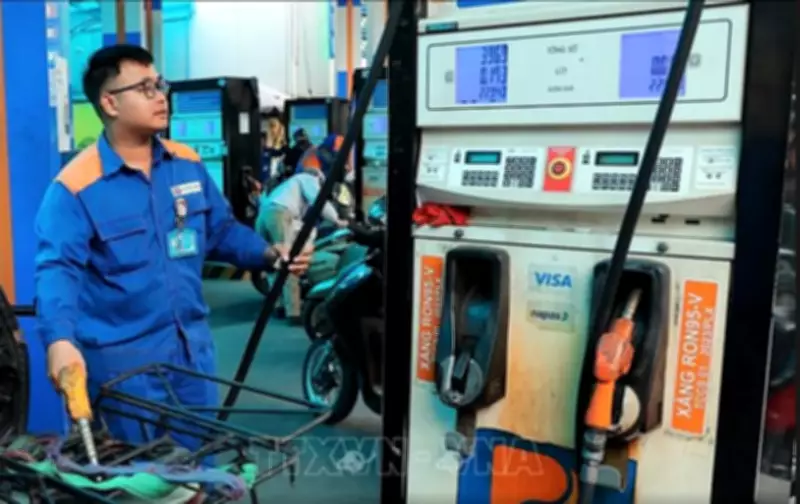
In March 2026, petrol stations throughout Vietnam experienced extensive queues as customers lined up to refuel amid a sharp surge in prices, fueled by escalating tensions in the Middle East. This situation has created significant challenges for both consumers and the transport industry.
Record-High Fuel Prices
According to local daily VnExpress, citing the Ministry of Industry and Trade and the Ministry of Finance, the price of RON95 gasoline—the most widely used fuel in Vietnam—rose to 33,840 Vietnamese dong (approximately 1.34 U.S. dollars) per liter on March 24, 2026. Simultaneously, diesel climbed to nearly 39,660 Vietnamese dong (about 1.58 dollars) per liter, marking the highest levels since June 2025.
Compared to the end of February, before the tensions intensified, the price of RON95 surged by more than 13,000 Vietnamese dong (around 0.5 dollars), representing an increase of over 60 percent. This dramatic rise is exerting direct pressure on living costs and transport operations across the country.

Impact on Workers and Daily Commuters
The sharp increase in fuel costs is weighing heavily on the incomes of many workers, particularly those whose livelihoods depend heavily on daily transportation. Nguyen Luu Anh Dat, a ride-hailing motorbike driver in Hanoi using the Grab platform, reported a decline in his earnings as fuel expenses mount.
"Previously, I only needed about 80,000 Vietnamese dong (about 3.1 dollars) to fill up my tank for a full day of work. Now it costs around 120,000 Vietnamese dong (approximately 4.7 dollars), meaning I spend an extra 40,000 Vietnamese dong (about 1.6 dollars) per day, or more than 200,000 Vietnamese dong (around 8 dollars) per week," he explained to Xinhua.
He added, "Although the number of customers hasn't changed much, the biggest pressure now is having to calculate routes carefully to save fuel and avoid inefficient trips."
Transport Businesses Face Difficult Choices
Against this backdrop, transport business operators note that raising service prices is not always a feasible solution. Nguyen Van Toan, a transport business operator in Hanoi, highlighted that sharp price hikes could drive customers away, especially as the market faces strong competition from other modes of transport, such as electric vehicles.
"We only dare to increase prices slightly to retain regular customers. We cannot raise prices abruptly because competition in the market is very intense," he stated.
Instead, many operators are opting to optimize their operations to cut costs. Toan mentioned that he tries to arrange trips more efficiently and secure passengers for both outbound and return journeys to avoid running empty, a strategy adopted by others in the sector.
Broader Sectoral Effects
The impact of rising fuel prices is also being felt more broadly in the transport sector, including in aviation and rail services. Following a warning from the Civil Aviation Authority of Vietnam over a possible aviation fuel shortage, national flag carrier Vietnam Airlines plans to cut 23 flights per week on low-demand routes starting from April 1.
Additionally, starting from March 26, Vietnam Railways officially increased passenger ticket prices by 3 percent, reflecting the broader economic pressures.
Economic Outlook and Inflation Concerns
Economist Vo Dai Luoc, former head of the Institute of World Economics and Politics under the Vietnam Academy of Social Sciences, provided insight into the macroeconomic implications. He noted that although rising fuel prices have affected citizens' daily expenses, the impact has not been significant enough to drive a sharp increase in inflation or pose risks to Vietnam's economic growth targets.
"Inflation and economic growth targets may be affected, but not substantially," he told Xinhua, suggesting a measured outlook despite the current challenges.
Overall, the fuel price surge in Vietnam, driven by Middle East tensions, is creating ripple effects across the economy, with transport workers and businesses adapting to maintain operations while managing costs.