Cebu Councilor Backs CBRT Launch but Raises Concerns Over Partial Operations
In a recent development, Cebu City Councilor Winston Pepito has voiced his support for the upcoming rollout of the Cebu Bus Rapid Transit (CBRT) system, while simultaneously expressing reservations about its readiness as partial operations are set to commence in March 2026. This statement follows an announcement by Transportation Secretary Giovanni Lopez, who confirmed that Package 1 of the CBRT is expected to be operational by that date.
Mixed Feelings Amidst Anticipation
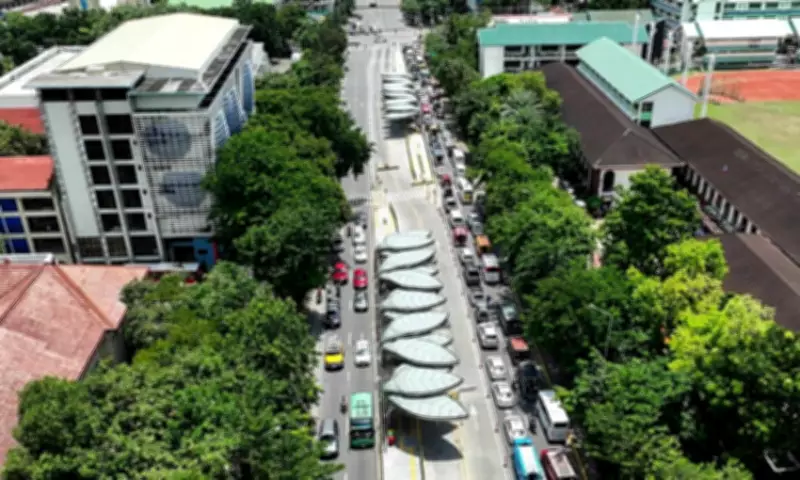
During the Usapang Budget 2026 Forum held on February 20, Secretary Lopez detailed that the Department of Transportation (DOTr) is in the final stages of completing Package 1, which will cover the route from the Cebu South Bus Terminal to Fuente Osmeña Circle. Pepito, who chairs the City Council Committee on Transportation, acknowledged the potential benefits of the CBRT but questioned whether the system is fully prepared for public use.
"I support it because we believe in the benefits of the CBRT. But I have mixed feelings because it is not yet fully operational and not yet completed," Pepito remarked in an interview on Friday, February 20. He likened the situation to "eating half-cooked rice," emphasizing that the current route under Package 1 is relatively short and may not allow commuters to fully appreciate the system's capabilities.

"The route is too short. People may not fully enjoy or appreciate it. It may not be as effective because of the limited coverage," he added. Despite this, Package 1 is projected to serve up to 34,000 passengers daily once it becomes operational.
Traffic and Efficiency Challenges
Pepito highlighted that the core concept of a Bus Rapid Transit system is to ensure zero traffic interference along its dedicated lanes. However, he warned that efficiency could be compromised once buses reach congested areas like Escario Street, where heavy traffic persists. "The idea of BRT is zero traffic. In fact, BRT can be better than a railway system. The problem now is the limited route," he explained.
Furthermore, Pepito noted that while there are plans to extend operations toward Cebu IT Park, parts of the route may involve mixed traffic, where BRT buses share lanes with private and public vehicles. He cautioned that without proper rerouting measures, this could lead to increased congestion and disappointment among commuters. "There should have been rerouting measures in place even before the CBRT implementation. Right now, private and public vehicles are still using areas near the BRT corridor, which could make traffic worse. We might end up disappointing commuters," he stated.
LPTRP Temporarily on Hold
In related news, Pepito revealed that the proposed Local Public Transport Route Plan (LPTRP), which he had earlier advocated for, has been temporarily suspended. According to him, the World Bank, one of the key funders of the CBRT project, requested a few months to conduct a new study on rerouting, potentially leading to changes in existing routes.
As a result, the City Council has decided to hold the ordinance related to the LPTRP in abeyance to accommodate the World Bank-funded study. "They asked that we hold it for now because they will conduct a study. There might be changes in the route," Pepito said, adding that no specific budget details have been provided for this new study yet.
Project Background and Future Plans
The CBRT project, originally conceptualized in 2014 and supported by a World Bank loan set to expire in September 2026, has experienced significant implementation delays over the years. Due to these accumulated delays, Secretary Lopez mentioned that the government is exploring a public-private partnership arrangement for the subsequent packages of the project, particularly focusing on operations and maintenance.
Lopez reiterated the DOTr's confidence that the system will begin operations within the first quarter of 2026, with safety and service reliability being top priorities. For Pepito, however, the primary challenge remains ensuring that the CBRT meets public expectations once it is operational.

"We are excited that it will finally be tested. But at the same time, we want it to be ready so that commuters will truly feel its benefits," he concluded, underscoring the need for a seamless and effective public transportation system in Cebu City.