The Department of Agriculture in Davao Region (DA-Davao) has issued a firm denial against recent allegations that its Farm-to-Market Road (FMR) projects are being "sold" to contractors. The agency labeled these claims as false, misleading, and damaging to public confidence in government infrastructure programs.
Official Rebuttal and Commitment to Process
In a strong statement released earlier this week, DA-Davao clarified its position. The agency stated it has never authorized any person or group to solicit money in exchange for preferential treatment in project awards. Officials reaffirmed their dedication to a transparent, competitive public bidding process and strict evaluation protocols for all infrastructure works under their supervision.
All FMR initiatives, including those funded by major programs like the Philippine Rural Development Project (PRDP) and the Mindanao Inclusive Agriculture Development Project (MIADP), must pass through established validation, evaluation, and approval steps before any construction begins. The regional office advised the public to stay cautious and rely solely on verified official announcements for accurate program information.

Showcasing Recent FMR Investments Across Davao
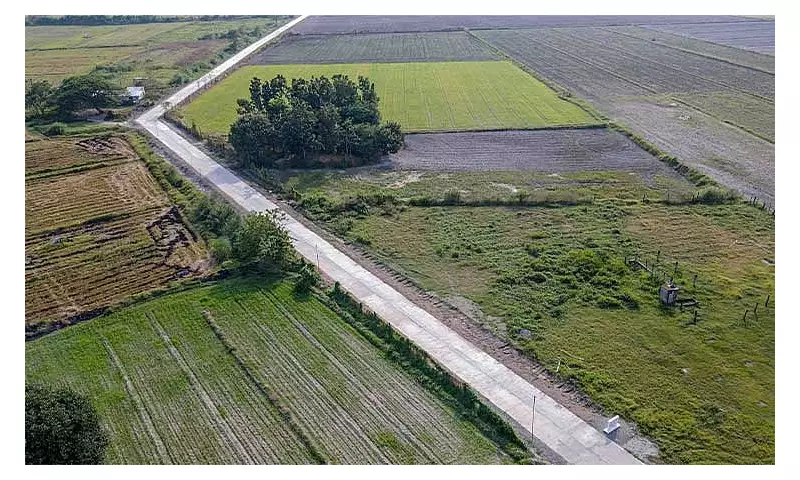
Farm-to-Market Roads are vital infrastructure that link farming areas to markets and highways, cutting transport costs and time for agricultural producers. The Davao Region, a key agricultural hub, has seen significant FMR investments from national and international sources in recent years.
Substantial completed projects highlight this push. In Magsaysay, Davao del Sur, an 8.81-kilometer FMR in Barangay Glamang was finished in early 2025 with a total cost of P177 million. This project was funded by the DA with support from the World Bank and European Union under the PRDP. It is projected to assist over 6,600 residents by improving market access and reducing post-harvest losses.
In Davao City, two FMR segments with a total length of roughly 3.3 kilometers were handed over to local communities in mid-2024. The combined investment for these roads was nearly P57 million. One road connecting Sitio Mingly to Sitio Upper Egay in Barangay Biao Escuela cost about P44.8 million, while a one-kilometer FMR in Barangay Tagakpan was valued at P11.7 million, benefiting close to 850 farmers.
Another example is the P29.76-million upgraded road in Barangay Tagbitan-ag, Island Garden City of Samal, completed in early 2025 to boost local rural economies. These projects demonstrate the geographic spread of FMR development across the region's coastal cities, inland towns, and island communities.
Future Pipeline and Addressing the Backlog
Planning documents reveal a larger pipeline of future infrastructure. The PRDP alone lists over P1.2 billion worth of FMR and related projects in Davao Region. These cover both rehabilitation and new construction across Davao del Norte, Compostela Valley, Davao del Sur, and Davao Oriental, including areas like Kapalong, San Isidro, Sto. Tomas, and New Corella.
Despite these ongoing efforts, a significant need remains. National DA data shows that as of late 2025, the Davao Region has an estimated P65.5 billion in unfunded FMR proposals. These proposals cover more than 7,000 kilometers of roads, underscoring the continuous high demand for rural infrastructure to accelerate agricultural growth.
Concluding its advisory, DA-Davao urged vigilance from the public. The agency asked people not to believe or circulate unverified information and warned it would not tolerate actions meant to mislead the public or damage the integrity of its programs. Stakeholders were reminded that legitimate updates are issued exclusively through official DA communication channels.