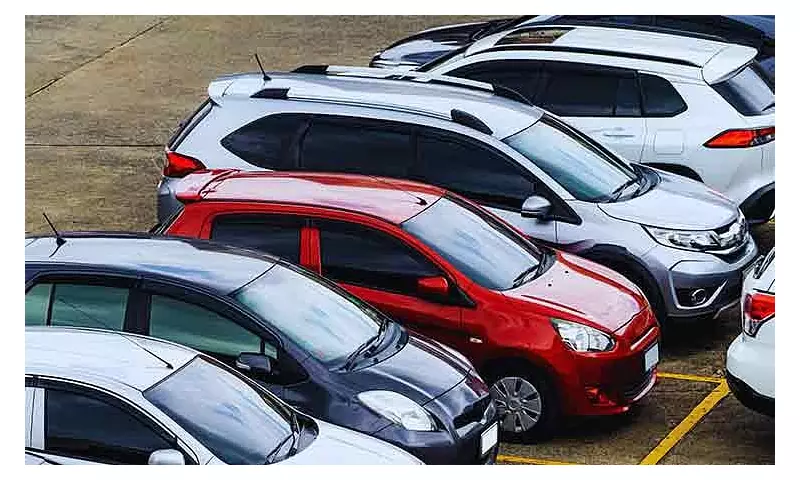
The Davao City government is accelerating its search for private sector partners to develop multi-level parking facilities through Public-Private Partnership (PPP) arrangements as the city confronts worsening parking shortages and central business district congestion.
Private Sector Interest Emerges
During a Business Forum held at Probinsya Restaurant on November 21, 2025, city officials revealed that JBC Food Corporation has entered exploratory discussions about participating in the city's public parking infrastructure program. This development marks one of the first significant indications of private-sector interest in the initiative.
Christian Cambaya, Unit Head for Investor Assistance and Servicing at the Davao City Investment Promotion Center (DCIPC), confirmed that the city has not yet secured a developer for its flagship parking-hub program despite ongoing efforts.

JBC's Parking Development Plans
JBC Food Corporation, owned by the prominent Cruz family, holds substantial property assets across Davao, including a 2,000-hectare development estate near Abreeza Mall of Davao in Bajada. According to Cambaya, the company currently operates a 2,000-square-meter open-air pay parking area across from Abreeza Mall and has expressed interest in converting this space into a more organized temporary parking facility.
"We're going to develop it as parking. We had an online meeting with Aldevinco—they plan to use it temporarily as a parking building while their master plan is ongoing. For now, it will operate as pay parking," Cambaya explained during the forum.
This strategic approach allows JBC to generate interim revenue while preparing the site for eventual mixed-use development as part of their long-term master plan.
City Properties Offered for Development
Cambaya confirmed that top city officials met with JBC Food Corporation's chair last month to explore potential PPP agreements for developing city-owned lots into multi-level parking hubs. Among the locations offered to JBC is a city-owned lot adjacent to an existing government compound that currently functions as an informal parking area.
Under the proposed PPP structure, the city will retain ownership of the land while private investors would finance, construct, and operate the multi-level parking facilities. The development may incorporate commercial components to maximize revenue potential through lease agreements or shared earnings.
City officials have identified another potential development site near the GFC Building, which currently lacks any parking infrastructure. This location is being evaluated as strategic for an additional multi-level parking building due to its high-traffic surroundings and proximity to major government and commercial buildings.
Open Door Policy for Proposals
As of today, no investor has formally committed to the parking hub program, and the city maintains an open-door policy for unsolicited proposals. The city is encouraging JBC and other potential developers to formalize their interest by submitting complete proposals detailing technical, financial, and development plans.
City officials hope that JBC's exploratory interest will signal to other developers—particularly real estate firms, infrastructure groups, and local conglomerates—that Davao is ready to partner on long-term urban development projects.
With traffic and commercial density continuing to rise in downtown and midtown zones, the city views PPP-driven parking hubs as a crucial step toward improving mobility and supporting sustainable economic growth in the region.