Davao Light Completes Utility Pole Relocation for Maa Flyover Project
In a significant development for Davao City's traffic infrastructure, the Davao Light and Power Company (Davao Light) has officially confirmed the successful relocation of all its utility poles along the Maa Flyover. This crucial step addresses one of the primary delays that had been hampering progress on this vital transportation project.
Completion of Relocation Work
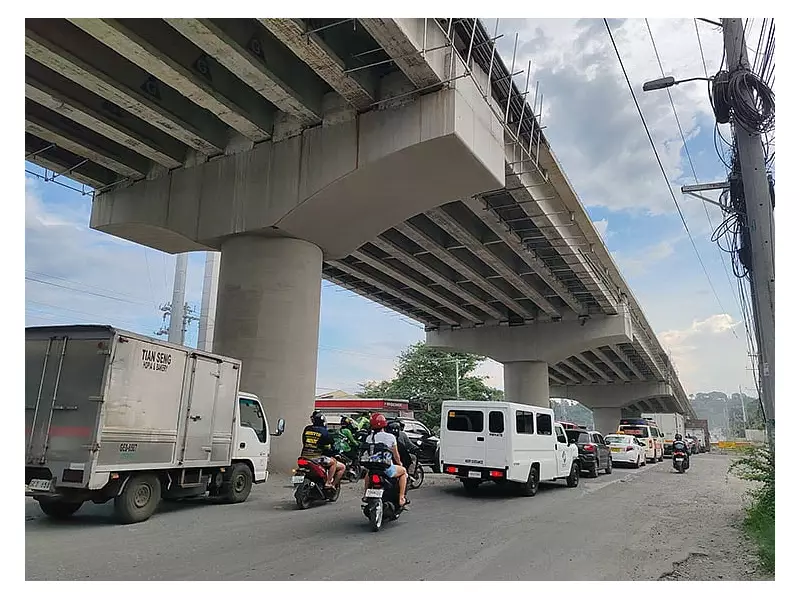
Engineer Enriczar Tia, President and Chief Operating Officer of Davao Light, revealed during a media interview on Tuesday, January 20, 2026, at the Sangguniang Panlungsod that the relocation work was completed around late December 2025. "You can see the flyover now that it already has a landing. It was in that area where they couldn't mobilize because the posts were there," Tia explained in a mix of English and Filipino, highlighting how the presence of poles had previously prevented construction crews from working effectively in that specific section.
Tia emphasized that Davao Light remains in continuous coordination with the Department of Public Works and Highways (DPWH) to identify additional ways the company can assist in accelerating the flyover's construction timeline. This collaborative approach underscores the commitment of both public and private entities to seeing this project through to completion.

Background on the Relocation Delay
The issue of utility pole relocation first came to public attention when the 21st Davao City Council invited Davao Light and various telecommunications companies to a session on August 12, 2025. The council sought explanations for the delays in moving utility poles under the Maa Flyover Project.
This inquiry was prompted by a report from the Department of Public Works and Highways–Davao Region (DPWH-Davao), which identified two main factors causing project delays:
- Road right-of-way (RROW) issues
- Pending relocation of utility poles
In response to these concerns, the city council established an ad hoc committee to investigate the prolonged delays affecting the Maa Flyover Project. The resolution, authored by Councilor Mahipus, appointed Councilor Jessica Bonguyan as chairperson, with Councilor Louie John Bonguyan serving as vice chair. Committee members included Councilors Sweet Advincula, Luna Acosta, and Jopet Baluran.
Significance of the Maa Flyover Project
The Maa Flyover represents a major infrastructure initiative designed to alleviate chronic traffic congestion at one of Davao City's busiest intersections—the Maa Diversion Road and Magtuod junction. As part of a broader strategy to improve traffic flow along the Diversion Road, this elevated roadway serves as a critical route for both commuters and cargo vehicles traveling across the metropolitan area.
The flyover's design features an elevated bridge structure that allows vehicles to bypass ground-level intersections, thereby reducing the heavy congestion that has long plagued this transportation corridor. The comprehensive project scope includes:
- Road widening initiatives
- Approach ramps for smooth transitions
- Advanced drainage systems
- Various safety enhancements to improve overall travel efficiency
Current Construction Status
According to the latest DPWH-Davao report from October 2025, the Maa Flyover project has reached 84.3 percent completion. Ongoing construction activities include:
- Installation of micro piles at the approaches
- Construction of mechanically stabilized earth (MSE) retaining walls
- Development of drainage structures
- Installation of concrete railings and parapets
- Reconstruction of the four-lane road with 300-millimeter thickness
- Additional road widening work
- Installation of solar-powered streetlights
The completion of utility pole relocation by Davao Light represents a critical milestone that removes a significant obstacle to the project's finalization. With this hurdle cleared, construction teams can now work more efficiently toward completing the remaining elements of this important infrastructure development that promises to transform transportation in Davao City.