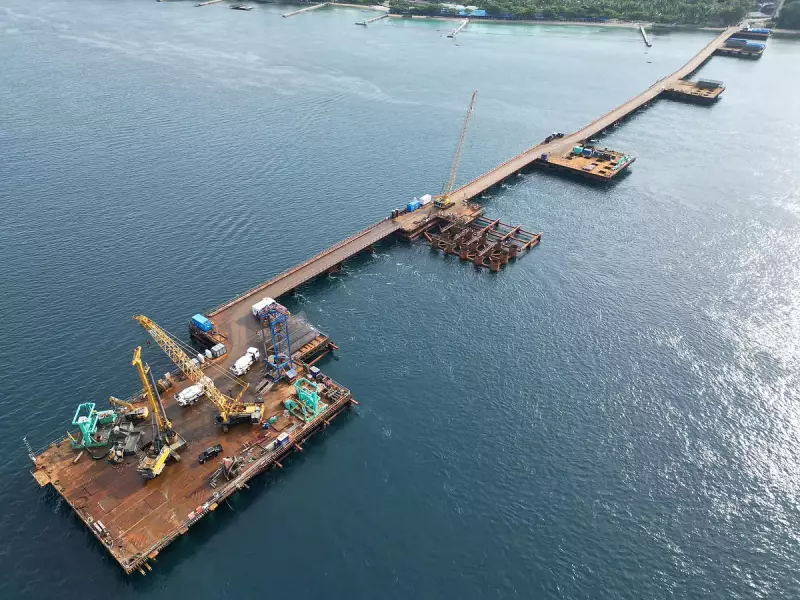
The ambitious bridge linking Samal Island to Davao City is now nearly halfway finished, marking a significant milestone for the Davao Region. According to the latest update from the Island Garden City of Samal (Igacos), the Samal Island–Davao City Connector (SIDC) has reached 46.47 percent overall physical completion. This progress was confirmed following a recent field inspection, with the Department of Public Works and Highways (DPWH) affirming that construction remains firmly on schedule for its anticipated opening in 2028.
Preparing for a New Economic Link
Local authorities are not waiting for the bridge to be finished before planning for its impact. Mayor Lemuel “Toto” Reyes has proactively initiated preparations to overhaul the island's transport system. In September, he convened a consultative meeting with various stakeholders to map out a comprehensive plan for Samal's future transportation network.
Mayor Reyes emphasized that close coordination between the local government, national agencies, and private stakeholders is crucial. The goal is to build a system that fuels economic growth while carefully preserving the island's renowned livability and charm.

The SIDC is a landmark 3.9-kilometer, four-lane cable-stayed bridge. It will connect Barangay Limao in Samal to the R. Castillo–Daang Maharlika junction in Davao City, crossing the Pakiputan Strait. With a design featuring a 47-meter vertical navigational clearance, the structure is engineered to accommodate up to 25,000 vehicles daily.
The project's benefits are substantial. Once operational, it is projected to slash travel time between the two points from the current 30 to 55 minutes by ferry to a mere five minutes. This dramatic improvement is expected to be a major boost for tourism and cross-strait economic activity across the entire region. The bridge is funded through China's Official Development Assistance and is being constructed by the China Road and Bridge Corporation under the management of the DPWH Unified Project Management Office.
Navigating Environmental Challenges
Despite the steady construction progress, the SIDC project has navigated significant environmental concerns. In April 2025, residents and environmental groups filed a petition for a Writ of Kalikasan. They sought to halt construction, arguing that it threatened coral ecosystems near the Paradise Reef and the Hizon Marine Protected Area. While expressing support for the bridge's concept, the petitioners advocated for its realignment to better protect marine biodiversity.
The judicial process has seen several developments. The Court of Appeals earlier denied a request for a Temporary Environmental Protection Order that would have stopped construction. Subsequently, the Supreme Court issued a Writ of Kalikasan on July 1, 2025. This order directed the DPWH, the Department of Environment and Natural Resources (DENR), the Samal Island Protected Landscape and Seascape Protected Area Management Board, and the contractor to submit verified responses to the allegations.
Environmental lawyer Jenny Ramos clarified that the case is still pending. She noted that the Court of Appeals' ruling only denied a provisional remedy and did not constitute a dismissal of the overarching petition. This means environmental scrutiny of the project's impact continues alongside physical construction.
A Region Transformed
The SIDC bridge represents more than just concrete and steel; it symbolizes a transformative shift for the Davao Region. The leap from ferry-dependent travel to a five-minute drive will fundamentally alter daily life, commerce, and tourism patterns. As the project moves past the 46% completion mark, the focus intensifies on finalizing construction and ensuring that the supporting infrastructure and regulations are ready for 2028.

The parallel narrative of environmental advocacy highlights the growing public demand for development that balances progress with ecological preservation. How this balance is struck will be as much a part of the bridge's legacy as its economic benefits. For now, with the DPWH confirming the schedule, the Davao Region can watch as its most iconic infrastructure project steadily rises from the waters of the Pakiputan Strait.