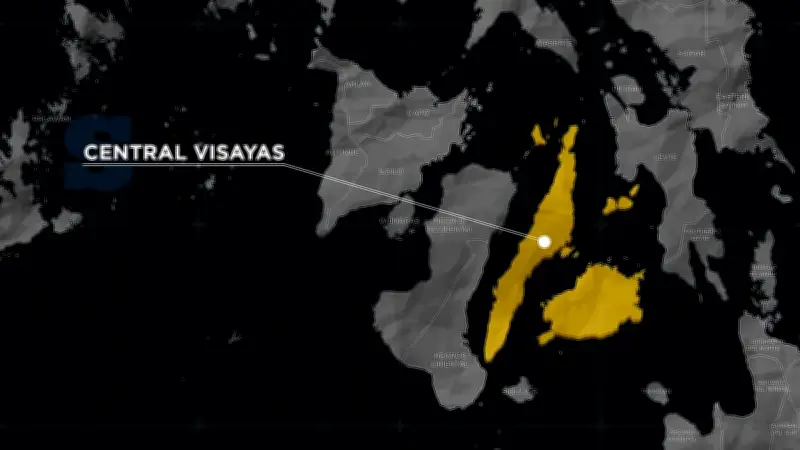
The regional leadership in Central Visayas is forming a technical working group (TWG) to target systemic supply chain vulnerabilities and cartels blamed for driving up food inflation across the region.
During the second Regional Unified Package for Livelihoods, Industry, Food and Transport (Uplift) Committee (RUC) 7 meeting on June 24, 2026, Department of Labor and Employment (DOLE) 7 Director Roy Buenafe proposed the creation of the body. "The two provinces, Cebu and Bohol should now create a technical working group to study especially on fish and other seafood products," Buenafe said.
Cebu's heavy reliance on food imports
Cebu Governor Pamela Baricuatro supported the call for a synchronized regional strategy, citing Cebu's heavy reliance on external producers. "Seventy percent of food supply in Cebu comes from outside. We are not food secure here in the province," Baricuatro said. Cebu Provincial Administrator Joseph "Ace" Durano identified Cebu's dependence on food imports from neighboring regions as the primary cause of its vulnerability to rising fuel costs and high inflation rates.

The Philippine Statistics Authority reported that Cebu Province's inflation reached 13.6 percent in May 2026, the highest among all provinces and highly urbanized cities within Central Visayas. In a separate report, Central Visayas posted the highest inflation rate nationwide for the 10th consecutive month at 10.8 percent, driven largely by rising costs for food, transport, power, and water.
Investigating trade routes and bottlenecks
The TWG will evaluate the trade routes of fish, seafood, and other primary agricultural products entering Cebu and Bohol to pinpoint exactly where logistics bottlenecks and artificial price inflation occur. "We want to know and source from direct producers. Where are these predictions? Say for example, for pork, can we directly get from the source itself? Not to source it from other traders and especially fish and seafood production," Buenafe stated.
Buenafe presented three distinct manifestations that together form a data-driven strategy to eliminate market inefficiencies. "We are confident that we have supplies, but we have to look at people coming from around so that we can know what is really the measurement of food supply that we need at a given time," Buenafe said.
Support from RUC members
RUC member Argeo Melisimo strongly backed the proposal, warning that high transport costs, variable food availability, and market manipulation heavily burden both businesses and workers. "The monopoly and cartel is real. It's real, no? Some people are taking advantage of the inefficiencies of the system, and then the transport facilities and the source," Melisimo said.