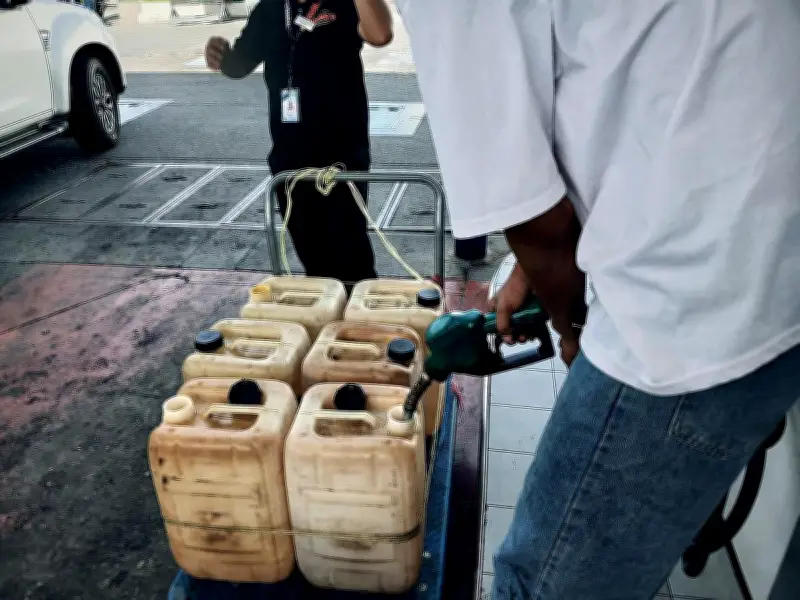
Fuel prices across the Davao Region remained varied during the June 16–22 monitoring period, with Davao City posting some of the highest average prices for premium gasoline and diesel among major urban centers in the region, according to the latest retail pump price monitoring released by the Department of Energy–Mindanao Field Office (DOE-MFO).
Premium and Regular Gasoline Prices
DOE-MFO's weekly monitoring showed that premium gasoline in Davao City averaged P79.78 per liter, while regular gasoline averaged P78.42 per liter. Among the six monitored areas, Tagum City recorded the highest average premium gasoline price at P79.86 per liter, narrowly surpassing Davao City. Mati City followed at P80.09 per liter. Meanwhile, Panabo City posted the lowest average premium gasoline price at P75.67 per liter, providing motorists a more affordable option compared to neighboring cities.
For regular gasoline, Tagum City also registered the highest average at P78.01 per liter, while Panabo City reported the lowest at P75.17 per liter.

Diesel and Kerosene Trends
Diesel, the fuel most commonly used by public utility vehicles and commercial transport operators, averaged P77.24 per liter in Davao City, with prices ranging from P73.20 to P85.30 per liter. Diesel prices showed a similar trend, with Davao City's average among the highest in the region, surpassed only by Mati City at P77.04 and Tagum City at P76.20.
Kerosene prices remained elevated, particularly in Digos City, where the fuel reached P109.05 per liter, while Davao City recorded an average of P100.48 per liter. DOE data showed that kerosene continues to be the most expensive petroleum product monitored due to global market movements and supply-related costs.
Market Context and Transparency Efforts
The latest monitoring period comes after the Department of Energy implemented weekly fuel price adjustments in response to developments in the global oil market. DOE-MFO regularly publishes prevailing pump prices across Mindanao to promote transparency in the downstream oil industry and help consumers compare fuel costs among cities.
The agency emphasized that monitored prices may vary depending on location, brand, operating costs, and supply conditions, and could change if oil companies implement additional adjustments during the monitoring period.