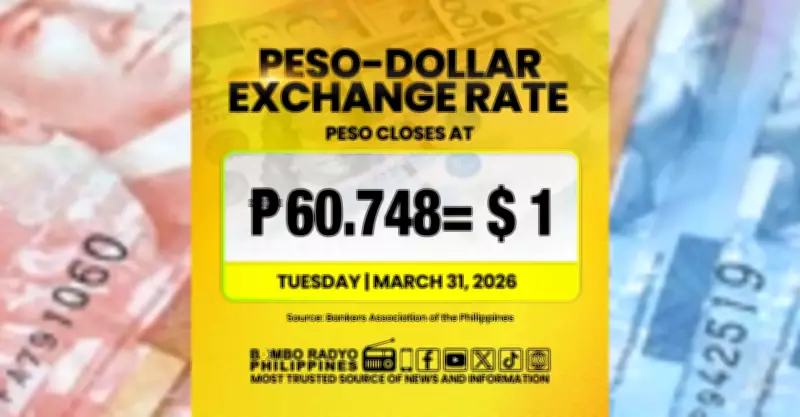
The Philippine peso has plunged to a new all-time low, closing at P60.74 per US dollar on March 31, 2026, marking a significant depreciation from the previous record of P60.69 set just a day earlier. During trading, the currency even dipped to an intraday low of P60.84, highlighting sustained pressure on the local monetary unit. This decline represents a nearly P1.90 drop since December 2025, when the peso was valued at P58.79, underscoring a rapid and concerning trend in the foreign exchange market.
Key Drivers Behind the Peso's Decline
Financial analysts attribute the peso's weakness primarily to escalating tensions in the Middle East, which have triggered a surge in global oil prices. Brent crude oil, a key benchmark, reached $87 per barrel this week, exacerbating inflationary pressures and boosting demand for the US dollar as a safe-haven asset. This combination of factors has placed immense strain on the Philippine currency, reflecting broader economic vulnerabilities in the region.
Stock Market and Investor Sentiment
Concurrently, the Philippine Stock Exchange Index (PSEi) experienced a sharp decline, falling by 2.5% on March 30, 2026. This drop signals growing investor anxiety amid the currency turmoil and external economic shocks, with market participants closely monitoring developments for potential impacts on corporate earnings and economic stability.

Central Bank Response and Future Outlook
In response to the peso's depreciation, the Bangko Sentral ng Pilipinas (BSP) has assured the public that it is actively monitoring the situation. The central bank is scheduled to hold a monetary policy meeting on April 23, 2026, where officials will discuss potential interventions, such as interest rate adjustments or other measures, to stabilize the currency and address inflationary risks. This proactive stance aims to restore confidence in the financial markets and mitigate further economic disruption.
Overall, the peso's record low underscores the interconnectedness of global events and local economies, with Middle East conflicts and oil price fluctuations posing significant challenges for the Philippines. As the BSP prepares its policy response, stakeholders await decisive actions to curb the currency's slide and support economic resilience in the coming months.