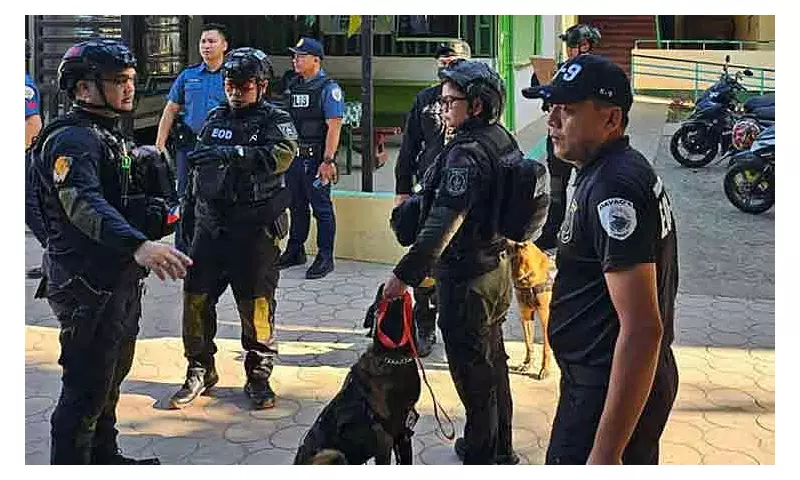
The Davao City Police Office (DCPO) has issued a critical clarification regarding a disturbing trend of bomb threats targeting educational institutions in the city. Authorities have determined that a significant majority of these alarming reports are deliberately timed to coincide with crucial examination periods, with the apparent intent of disrupting academic schedules and creating chaos within school environments.
Pattern of Threats Aligns with Academic Calendar
Speaking during a recent briefing with the Davao Peace and Security Press Corps, DCPO spokesperson Police Captain Hazel Tuazon provided detailed insights into this concerning pattern. She explained that law enforcement officials have observed a recurring and predictable trend where bomb threats are reported either shortly before or during scheduled examination periods at various schools across Davao City.
"Kasagaran ani mahitabo especially kung padulong exam, usually mao gyud ni siya ang mahitabo. Unfortunately, ang nag-cause pud ani estudyante ra pud," Tuazon stated during the press conference, highlighting the unfortunate reality that students themselves are often behind these disruptive incidents.

Recent Incidents Prompt Heightened Security Measures
This official statement followed a series of bomb threat incidents that temporarily disrupted normal school operations in Davao City earlier this month. On Wednesday, January 21, 2026, two prominent educational institutions found themselves at the center of security concerns.
Both Cabantian National High School and Assumption College of Davao were placed on heightened alert status after receiving separate bomb threats within a concentrated 24-hour period. These threats triggered immediate and comprehensive security responses from local authorities, including:
- Emergency evacuations of students and staff
- Thorough inspections of school premises and facilities
- Deployment of specialized security personnel
The DCPO later confirmed through official channels that no explosive devices were discovered at either location following exhaustive clearing operations conducted by the Explosive Ordnance Disposal and Canine (EOD-K9) Unit, with additional support provided by the Special Weapons and Tactics (SWAT) team. Both incidents were subsequently classified as hoaxes after thorough investigation.
Serious Legal Consequences for False Threats
In response to these incidents, Police Captain Tuazon reiterated the serious legal implications of making bomb threats, regardless of intent or motivation. She emphasized that such actions constitute serious criminal offenses under Presidential Decree No. 1727, whether they are intended as jokes, pranks, or attempts to avoid academic responsibilities.
The police spokesperson provided specific details about the potential penalties individuals might face:
- Imprisonment of up to five years for those found guilty
- Fines reaching up to P40,000
- Possible combination of both imprisonment and financial penalties
Tuazon further clarified that making or spreading bomb threats through any communication channel—whether in person, via text messages, phone calls, social media platforms, or other online methods—can lead to criminal prosecution. The legal system treats all such reports with equal seriousness regardless of the medium used to communicate the threat.
Broader Impact Beyond Classroom Disruptions
The DCPO official stressed that false bomb threats create consequences that extend far beyond temporary class suspensions or academic schedule disruptions. These irresponsible acts generate unnecessary fear and anxiety among multiple stakeholders within the educational community, including:
- Students who experience trauma and disruption to their learning
- Parents concerned about their children's safety and well-being
- School personnel responsible for maintaining secure environments
Additionally, such hoaxes divert critical police resources and emergency response capabilities that could otherwise be deployed to address genuine security threats within the community. The allocation of specialized units like EOD-K9 and SWAT teams to investigate false reports represents a significant drain on public safety resources.

Community Responsibility and Ongoing Vigilance
The Davao City Police Office concluded their statement with a strong appeal to students and the general public to exercise greater responsibility and social awareness. Authorities specifically warned against trivializing bomb threats or treating them as harmless pranks, emphasizing that every report of a possible explosive device will be treated as legitimate until thoroughly investigated and proven otherwise.
This approach reflects the serious nature with which law enforcement agencies must treat all potential security threats, particularly those involving educational institutions where large numbers of young people congregate daily. The DCPO's message underscores the importance of community cooperation in maintaining safe learning environments throughout Davao City.