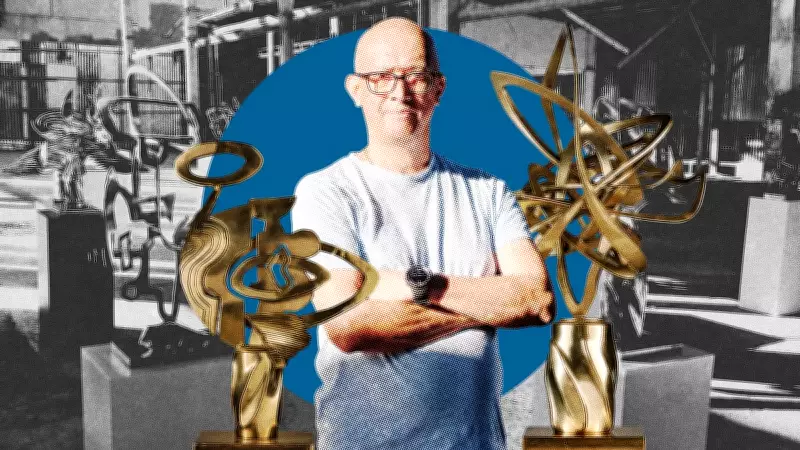
This Cebuano artist creates as though he is trying to listen to what broken things still remember. Born in 1970, Anton V. Quisumbing approaches material not as something to dominate, but as something to negotiate with.
Exhibition Overview
In his ongoing exhibition “Pasulong: Recent Sculptures by Anton V. Quisumbing” at Yuchengco Museum, Makati City, 29 compositions emerge from salvaged bronze boat propellers recovered in the aftermath of typhoon Odette, which struck the Visayas in 2021. “They already carried history, movement and human experience within them,” Quisumbing said.
For two years, he worked through the remains of these propellers, piecing them back together not to restore their original function, but to transform their memory. The resulting works became “Pasulong,” a word that translates to “forward.”

Memory, Moving Forward
More than an exhibition of reconstructed metal forms, “Pasulong” is Quisumbing’s reflection on what it means to move forward after rupture. Built from objects shaped by disaster, the works refuse clean endings or restored wholeness. Instead, they hold onto fracture as evidence of survival.
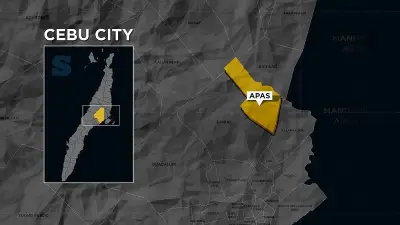
With the Philippines frequently facing typhoons, it is difficult to fully hold the scale of Odette’s devastation in 2021. Reports estimated that damage in Cebu City alone reached P1.7 billion in infrastructure, utilities and agriculture. Moving forward, the exhibition suggests, is never clean or linear.
Preservation of Memory
That awareness sits at the core of the exhibition. Quisumbing leans into irregularities and imperfections as proof of the uneven process of rebuilding. Quisumbing describes the process as an act of preservation through making. “I wanted the works to stand as reminders of our resilience as people,” he said, “how even after destruction, we continue to rebuild, move forward and create meaning from difficult experiences.”
Working through the stubbornness of bronze became its own confrontation. The material took time and patience. Healing, like sculpture, is slow and never easy.
Inside the gallery, those tensions take shape in arcs, spirals and fragmented silhouettes suspended between collapse and emergence. One of the central works, “Sight,” presents a distorted figure balanced on a twisting metal base. An almond-shaped eye stretches across its center, while armor-like forms suggest both protection and vulnerability.
A Return to Sculpture
After spending time focused on painting, this exhibition marks Quisumbing’s return to three-dimensional form. For him, painting and sculpture are not separate practices but continuous conversations. “Painting and sculpture complement each other in my practice,” he explained. “Painting allows me to explore emotion, memory, form and movement, while sculpture gives those ideas physical form and presence.”
“Painting often serves as a study that leads to sculpture, helping me develop composition and structure before translating them into three-dimensional works. Through sculpture, I can further explore space, light, weight and material in a more physical way.”
Though his past works have been exhibited internationally in Malaysia, Spain and the United States, Quisumbing’s practice remains rooted in his Cebuano sensibility, one that speaks through material to the lived realities of communities.
Curated by Miguel Rosales, “Pasulong” opened on May 15, 2026, and runs until May 30.