CEBU is being positioned as a vital gateway for trade and logistics in Southeast Asia. As the Philippines pushes for deeper economic ties with its neighbors, officials say Cebu's strategic location will help keep trade moving and protect businesses from global uncertainties.
In a press conference held on Wednesday, May 6, 2026, Department of Trade and Industry (DTI) Undersecretary Allan Gepty highlighted how Cebu is central to the country's regional plans. He explained that the province is a place where "trade moves and connections are built," making it the perfect hub to lead the Philippines into a more connected future.
Cebu: The Heart of Regional Trade
Undersecretary Gepty described Cebu as a critical center for maritime activity, tourism, and logistics. He noted that Cebu reflects the goal the Association of Southeast Asian Nations (ASEAN) has been working toward for nearly 60 years: a region where growth is shared and economies are linked.

By strengthening Cebu's role as a gateway, the government hopes to ensure that goods continue to flow efficiently. This is especially important today, as global issues like rising energy costs and tensions in the Middle East test the strength of economies worldwide.
"When energy prices rise, supply chains tighten, and international pressures build, ASEAN provides a platform for stability," Gepty said.
Big Wins for Small Businesses
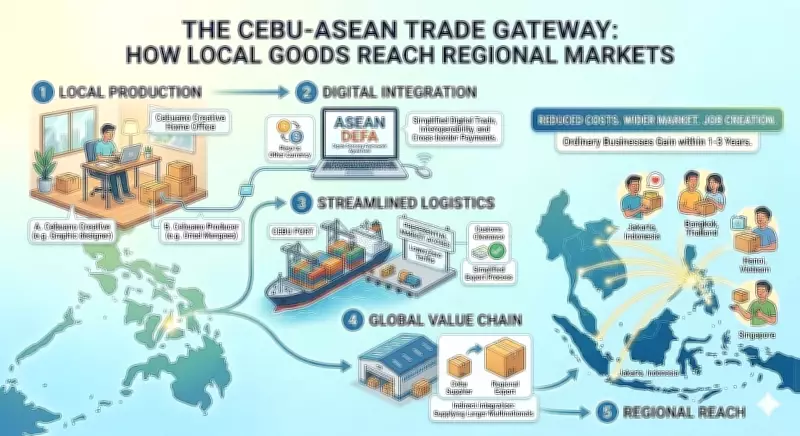
One of the most important parts of this regional cooperation is how it helps micro, small, and medium enterprises (MSMEs). Gepty emphasized that for a local business owner, the market is no longer just Cebu or the Philippines—it is the entire region.
Local businesses can expect to see several benefits over the next one to three years:
- Lower Taxes: Free trade agreements allow exporters to benefit from lower or zero tariffs.
- Easier Shipping: Simplified procedures will make it much easier for small firms to export their goods.
- Global Chains: Small businesses can grow by supplying products to large multinational companies. For example, a local mango grower becomes part of the global economy when their fruit is sold to a company that processes it for export.
The Future Is Digital
A major goal for the Philippines during its ASEAN leadership is the signing of the ASEAN Digital Economy Framework Agreement (DEFA). This agreement is designed to be a "great equalizer" for small businesses.
The plan focuses on:
- Improving online payment systems across borders.
- Helping small businesses use digital platforms to find customers in other countries.
- Strengthening rules on data and digital trade.
Beyond digital tools, the region is also working on the ASEAN Power Grid, which would allow countries to trade electricity across borders to improve energy security.
Seeing Results Today
While some plans are for the future, ASEAN 2026 spokesperson Dominic Xavier Imperial said Filipinos are already feeling the benefits. He noted that the region's stability gives international investors the confidence to partner with Philippine companies.
"The security and overall situation in the region gives everyone confidence to partner with the Philippines, especially investors and the private sector," Imperial said.
As Cebu hosts these major discussions, it is proving that it is more than just a tourist destination—it is a powerful engine for trade that will help local professionals, farmers, and creatives reach the global stage.