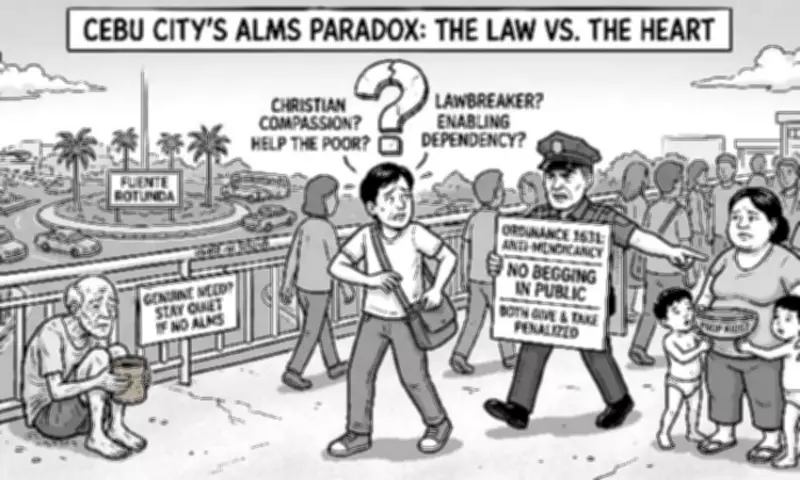
Cebu City has a law that criminalizes begging—Ordinance 1631, enacted in 1996, known as the Anti-Mendicancy Ordinance. The term "mendicancy" refers to begging for money, food, or donations as a primary livelihood. This ordinance is based on Presidential Decree 1563, the Anti-Mendicancy Law of 1978, which prohibits begging in public places, buildings, offices, commercial establishments, streets, and public utility vehicles. The national law also penalizes those who give alms, though the city ordinance may differ. Both laws aim to eliminate begging, protect children from exploitation, and rehabilitate beggars through social services rather than fostering dependence.
Christian Values vs. Legal Intent
Some critics argue that the anti-mendicancy law contradicts Christian teachings, which emphasize helping the needy. However, the law's noble intent is to provide long-term solutions, such as skills training and livelihood programs, rather than temporary alms. The goal is to help beggars become self-reliant and maintain dignity.
Public Perception and Moral Dilemmas
It is easy to judge beggars as a nuisance, but not all begging is equal. Some individuals are genuinely desperate, with no other options. A decent person can usually discern who deserves help. Personally, I choose not to give, not because of the law or lack of compassion, but to avoid encouraging a dependency culture. Many agree with this approach, wanting to help the poor become self-sufficient.

However, there are exceptions. Some beggars, like an overweight woman with half-naked children at Fuente Rotunda, exploit kindness. Others enter eateries and refuse to leave until they get money. Despite this, I have learned to stay quiet rather than complain, as a friend reminded me that if I don't give, I should not criticize.
Recent Incident Sparks Debate
On May 7, 2026, a 68-year-old man playing harmonica on Colon Street was taken into custody by the Anti-Mendicancy Office. He claimed he was not soliciting but accepting voluntary donations to buy food for his grandchild. While the City acted legally, the optics were poor. The mayor acknowledged an increase in beggars due to worsening economic conditions and urged coordination with the City rather than direct almsgiving. However, he did not address what his administration is doing to solve the problem.
The City is mandated by law to provide skills training, livelihood programs, or assistance for return to home provinces through the "Balik Probinsya" program. Yet, enforcement without adequate support raises questions about effectiveness and compassion.