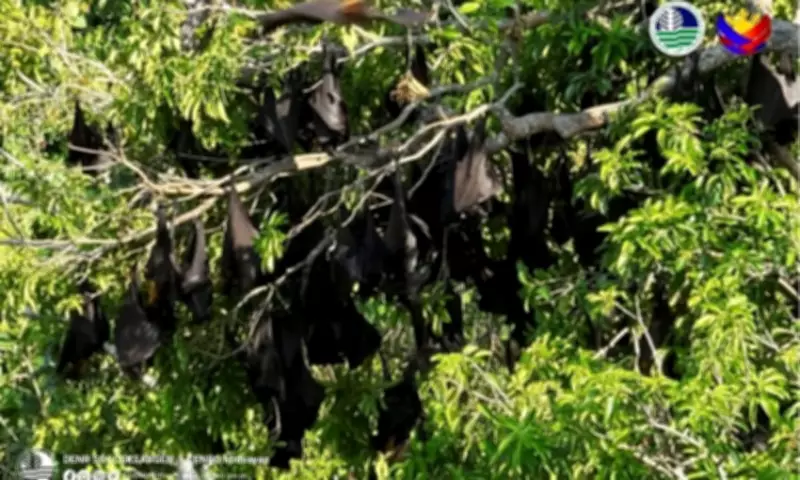
The Department of Environment and Natural Resources-Community Environment and Natural Resources Office (DENR-CENRO) Midsayap has documented one of Mindanao's largest fruit bat colonies in Banisilan, Cotabato, marking a significant victory for biodiversity conservation.
Discovery of a Massive Colony
Environmental scientists have discovered approximately 160,000 flying foxes in the forests of Banisilan, Cotabato. This colony is considered one of the largest recent wildlife concentrations documented in Mindanao. The finding draws scientific attention to the vital ecological role of fruit bats in sustaining Philippine forests.
Environmental monitors described the discovery as both a conservation breakthrough and evidence that parts of Mindanao continue to serve as biodiversity refuges capable of supporting endangered wildlife populations. Following an assessment conducted from April 29 to 30, they stated, "The discovery highlights one of the largest recorded concentrations of fruit bats in the region, underscoring the ecological importance of the area."

Species Identified
A two-day roost survey and fly-out monitoring by DENR-CENRO Midsayap identified three key species inhabiting the site: the critically endangered golden-crowned flying fox (Acerodon jubatus), the endangered large flying fox (Pteropus vampyrus), and the island flying fox (Pteropus hypomelanus).
The golden-crowned flying fox ranks among the world's largest bat species and exists only in the Philippines. Scientists have long recognized this species for its crucial role in seed dispersal and tropical forest regeneration. A 2013 study published in the journal PLOS ONE found that golden-crowned flying foxes travel long distances across fragmented landscapes while dispersing seeds and plant material, helping forests recover naturally even in disturbed ecosystems. Researchers noted that the species plays a major role in reconnecting fragmented forest habitats.
Another Philippine study published in the International Research Journal of Biological Sciences described golden-crowned and large flying foxes as "ecologically important species for forest regeneration, plant pollination and seed dispersal." Scientists warned that continued hunting and deforestation could severely disrupt tropical forest recovery.
Ecological Importance
Researchers explained that fruit bats are among the few animals capable of dispersing large seeds across mountains, rivers, and fragmented landscapes, making them essential to the survival of native tree species in Southeast Asian rainforests. The colony's unusually high number of juvenile bats confirms the forest's role as an active breeding and nursery habitat. Conservation biologists consider the presence of juveniles a strong indicator of habitat stability and reproductive success among threatened wildlife populations.
Behavioral Observations
Wildlife observers documented dramatic evening fly-out behavior beginning around 5:30 p.m., with thousands of bats emerging above the forest canopy before dispersing toward feeding grounds. Researchers also observed behavioral shifts compared to earlier sightings, including higher-altitude flight patterns over the canopy. Scientists said these changes could reflect environmental pressures, habitat adaptation, predator avoidance, or weather-related factors.
Conservation Challenges
The Philippines remains one of the world's most biologically diverse countries, but conservation groups warned that rapid forest loss continues to threaten endemic wildlife species. Ecological studies show the country has lost much of its old-growth forests over the last century due to logging, mining, land conversion, and agricultural expansion. Because flying foxes depend heavily on intact forests, large surviving colonies have become increasingly rare nationwide. Studies on Philippine flying fox populations have documented steep declines in colony sizes over recent decades due to habitat destruction and hunting pressure.

Future Prospects
Environmental officials described the Banisilan colony as a potential stronghold for threatened bat species in Mindanao and called for stronger habitat protection measures around Sitio Kalantay. Conservation experts added that protecting flying fox populations goes beyond wildlife preservation because healthy bat populations support climate resilience, watershed protection, and biodiversity recovery through natural forest regeneration. With the colony appearing stable and reproductively active, researchers believe the discovery could become an important reference point for future biodiversity studies and conservation planning in the Philippines.