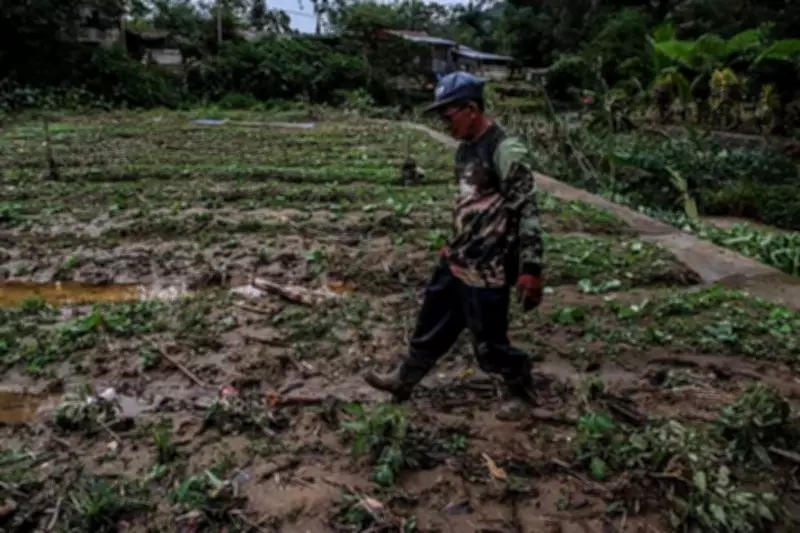
A prolonged lack of rain has affected at least 663 farmers across 19 upland barangays in Cebu City, with agricultural damage now covering more than 234 hectares of farmland, according to a partial assessment by the City Agriculture Department (CAD).
Assessment Details
A consolidated report dated May 20, 2026, showed that 5,801 registered farmers were assessed during initial monitoring, with 663 already partially affected by the lack of rain that disrupted crops, irrigation, and agricultural productivity in upland and rural barangays.
The report, submitted by Assistant City Agriculturist Arlie Gesta to City Administrator Albert Tan, said the assessment would guide possible government interventions and assistance for affected farming communities.

The Philippine Atmospheric, Geophysical and Astronomical Services Administration has raised an El Niño alert, warning of a 79 percent probability that the climate phenomenon will develop between June and August 2026 and persist until early 2027.
Affected Barangays
Data from CAD showed that Barangay Tabunan recorded the highest number of affected farmers at 162, followed by Taptap with 74, Cambinocot with 72, and Pung-ol Sibugay with 68.
In terms of percentage damage, Budlaan posted the highest impact at 51.91 percent, followed by Tagbao at 45.59 percent, Tabunan at 42.69 percent, and Agsungot at 42 percent.
The report also identified 233.57 hectares of affected agricultural land out of the 2,856.54 hectares monitored during the initial assessment.
Crops Damaged
Among the crops heavily affected by the prolonged lack of rain were banana, eggplant, string beans, tomato, cucumber, ampalaya, chili pepper, sweet corn, and ornamental plants such as orchids, gerbera, asters, and wonder white flowers.
Banana plantations in Budlaan, Bonbon, Mabini, and Sudlon 1 were among those affected, while vegetable-producing areas such as Tabunan, Taptap, Guba, and Sinsin also reported damage to tomatoes, cucumbers, and ampalaya.
The CAD also noted that ornamental plants cultivated in Barangays Babag, Budlaan, and Pung-ol Sibugay were vulnerable to extreme heat and prolonged lack of rain.
Assessment Ongoing
Despite the growing number of affected farmers, the CAD said the figures remained partial because data gathering and validation were still ongoing in several upland barangays.
Additional reports are still being consolidated from Barangays Adlaon, Lusaran, Sirao, Sudlon 2, Sapangdaku, Buhisan, Binaliw, Busay, and Toong.
“The figures and values reflected in this report are subject to change and may increase as field monitoring, data gathering, consolidation, and encoding activities continue,” the report said.
CAD added that the data indicated severe drought had significantly affected agricultural productivity, particularly crops that require sufficient water supply and stable growing conditions.
Government Response
The latest assessment came as the City Government intensified preparations for the possible impact of prolonged lack of rain, including discussions on declaring a state of preparedness and expanding drought mitigation measures.
Mayor Nestor Archival said the city government was studying possible interventions for affected farmers, including cash assistance, free transport of produce, irrigation support, and the revival of the “Tabo sa Barangay” market linkage program to help farmers sell their products directly in urban communities.
City officials are also assessing alternative water sources and drought-response measures as concerns grow over declining water supply and the impact of prolonged lack of rain on food security and livelihoods in upland barangays.