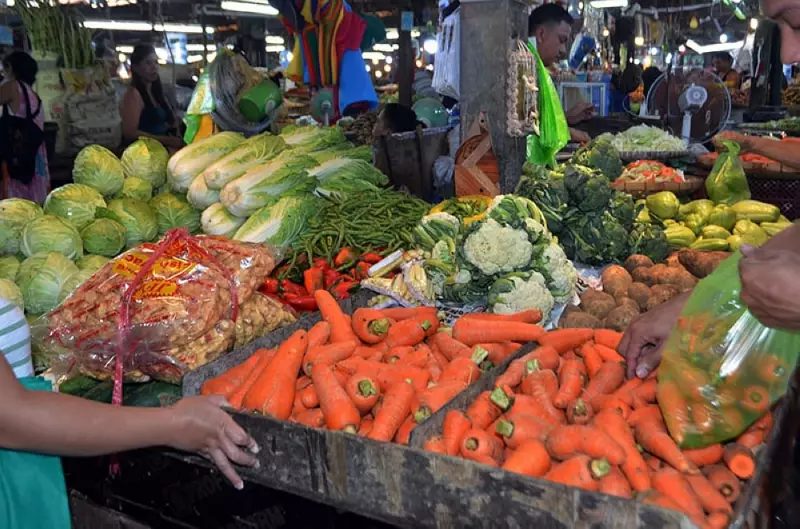
The Philippine Statistics Authority (PSA) has issued a warning that inflation rates for agricultural products are projected to rise in November 2025, primarily due to the devastating effects of Typhoon Tino (Kalmaegi) that struck Cebu Province earlier this month.
Typhoon Impact on Agricultural Supply
PSA 7 Chief Statistical Specialist Leopoldo Alfanta Jr. confirmed during the October inflation report on Wednesday, November 12, 2025, that the widespread flooding has severely affected agricultural production throughout Cebu Province. "The effects of the flooding really affected our agricultural products in general, even probably our logistics," Alfanta stated.
The statistical expert explained that numerous fishermen in coastal communities directly hit by the typhoon remain unable to resume their fishing activities. This disruption in the fishing industry, combined with limited supplies of poultry, livestock, and other agricultural products, is expected to create significant upward pressure on food prices throughout the region.

Price Increases and Economic Impact
Alfanta emphasized the basic economic principle that reduced supply typically drives increased demand, which subsequently leads to higher prices for goods and services. While the PSA cannot yet determine the exact magnitude of the inflation rate increase for November, officials noted that both Typhoon Tino and the approaching Typhoon Uwan could contribute to further price escalations.
Supporting this assessment, Elvin Milezza, head of planning, monitoring, and evaluation for the Department of Agriculture in Central Visayas, reported substantial damage to several areas, with livestock production being particularly affected. Milezza indicated that consumers should anticipate minimum price increases for meat, poultry, and vegetables in the coming weeks.
Despite the challenging outlook, Milezza expressed hope that local government units would effectively implement and monitor price freeze measures to help stabilize the situation and protect consumers from excessive price hikes.
October Inflation Context
The latest inflation data from October 2025 provides important context for understanding the potential impact of the typhoon. The PSA reported the following inflation rates for provinces and highly urbanized cities in the region:
- Bohol: 1.0 percent
- Cebu: 2.4 percent
- Cebu City: 2.5 percent
- Lapu-Lapu City: 5.8 percent
- Mandaue City: 3.7 percent
Notably, the food inflation rate in Central Visayas showed improvement, dropping to 2.9 percent from 6.3 percent in September. However, certain food categories continued to experience price increases, including oils and fats (up 1.2 percent) and ready-made foods and other food products (up 1.5 percent).
The overall inflation rate in Central Visayas for October decreased to 2.6 percent from 4.1 percent in September. This slowdown was largely attributed to decreases in two key categories: food and non-alcoholic beverages (down to 2.9 percent from 6.1 percent) and transportation (declining to 1.0 percent from 5.1 percent).
Despite these improvements, Central Visayas recorded the 17th lowest inflation rate among the 18 regions nationwide, indicating the region's ongoing economic challenges that may be exacerbated by the recent typhoon damage.