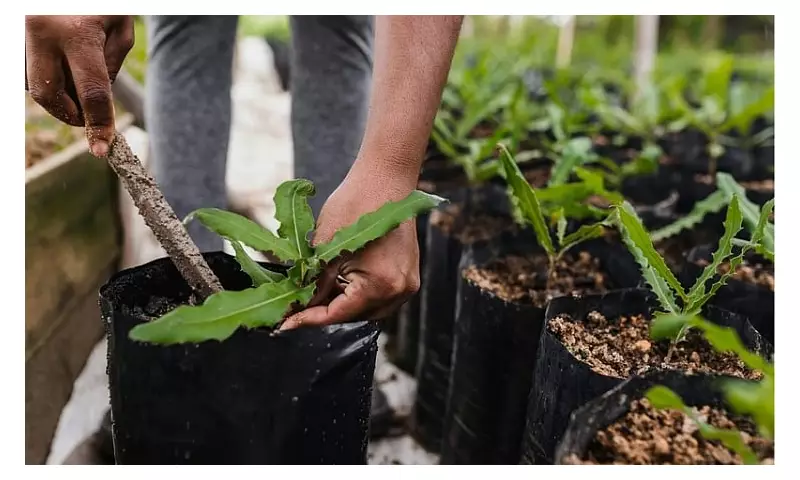
The Philippine Eagle Foundation (PEF) has announced a significant milestone in its fight to save the country's national bird. As of December 2025, the foundation has successfully planted more than 200,000 trees under its ambitious Planting for the Future initiative. This effort is crucial for restoring the forest habitats of the critically endangered Philippine Eagle.
A Call for Public Support in Forest Restoration
During a media interview at the Philippine Eagle Center in Malagos last Saturday, PEF's Nature-Based Solutions Manager, Tatiana Sarigumba, made a heartfelt appeal to the public. She emphasized that every single tree counts in the battle to bring back healthy forests.
"We need more help and support to participate in our forest restoration and agroforestry programs," Sarigumba stated. Her call to action goes beyond just planting; she stressed the importance of returning to check on the trees to ensure they are properly maintained and monitored.

Sarigumba explained that forest restoration benefits far more than just the majestic eagle. It supports entire ecosystems, including other wildlife, biodiversity, and ultimately, human communities that depend on healthy forests.
Reforestation Progress and Ongoing Challenges
The foundation's work has already made a visible impact on the landscape. With the 200,000 trees planted so far, PEF has managed to reforest over 1,000 hectares of land across several key regions. The specific reforested areas include:
- Tambobong and Sirib in Davao City
- Monkayo in Davao de Oro
- Areas in Bukidnon
- Arakan in North Cotabato
These projects actively involve Indigenous communities such as the Obu Manuvu, Tigwahanon, and Bagobo-Klata. Most planting follows agroforestry models, which combine trees with agricultural crops. However, Sarigumba noted a significant hurdle: incorporating fruit trees into these models remains difficult due to the rising costs of seedlings and labor, exacerbated by inflation.
The Road to 3 Million Trees and How to Help
The current effort is part of a much larger goal. On March 8, 2024, PEF, in partnership with Globe Telecom, launched the Planting for the Future: 3 Million Trees program. This initiative focuses on reforesting areas surrounding known Philippine Eagle nesting sites.
A key feature for donors is the ability to track their contributions through a comprehensive database. Supporting the cause is designed to be accessible:
- Individuals can adopt a tree for approximately P250.
- Donations can be made via PayPal, GCash, or the GlobeOne app.
- Globe users have the option to convert their reward points into donations, with one point equaling one peso.
The urgency of this work cannot be overstated. The PEF reports that there are fewer than 400 breeding pairs, or roughly 800 individual Philippine Eagles, left in the wild. The primary driver of their decline is rampant forest loss, which destroys their nesting, hunting, and rearing grounds.
The Philippine Eagle (Pithecophaga jefferyi), found only on four islands in the country, is listed as Critically Endangered by the International Union for Conservation of Nature (IUCN). The foundation itself cares for over 25 eagles at its center in Malagos, with breeding efforts also taking place at the National Bird Breeding Station (NBBS).