Juvenile Philippine Hawk Eagle Rescued in Davao de Oro Community
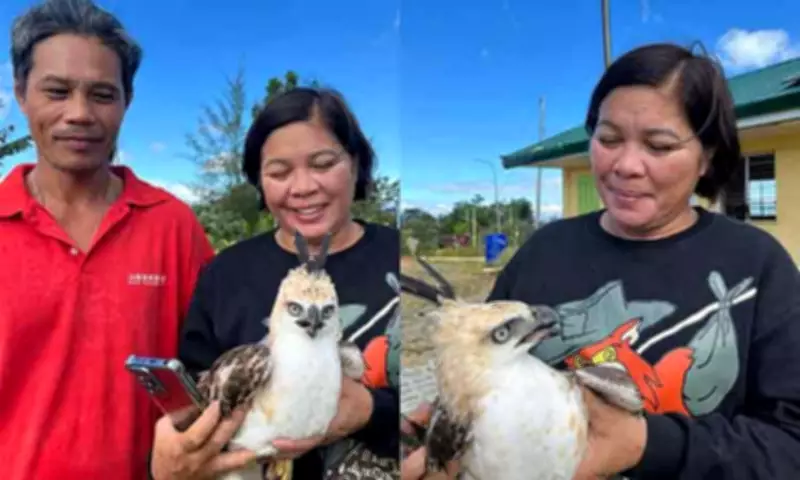
A juvenile Philippine Hawk Eagle, commonly referred to as lawin, has been successfully rescued and surrendered to authorities in Sitio Kilabot, Barangay Panansalan, Compostela, Davao de Oro. The incident underscores the critical need for wildlife protection and environmental stewardship in the region.
Discovery and Initial Rescue Efforts
The eagle was first discovered by Roy Toledo, a farm caretaker in the area, who was reportedly managing a health condition requiring a colonoscopy. Toledo found the bird in a chicken cage on April 5, 2026, where it had already consumed two chicks after causing a disturbance among the poultry.
Suzette Makilan, the school head of Florencio M. Guay Elementary School and a key figure in the rescue, advised Toledo against harming the eagle. She emphasized that the Philippine Hawk Eagle is a protected species under Philippine law, and violating this could lead to severe penalties. Makilan urged Toledo to turn the bird over to the Department of Environment and Natural Resources (DENR) for proper handling.

Coordination and Safe Surrender
Makilan coordinated with Municipal Mayor Levi Ebdao and Engr. Jessy Rosario Marron, head of the Municipal Environment and Natural Resources Office (Menro). Through their efforts, the eagle was safely surrendered to Menro on April 6, 2026, ensuring it received appropriate care.
This event marks the first recorded sighting of a Philippine Hawk Eagle in the community, which is known for its rich biodiversity, including occasional sightings of the Philippine Eagle, the country's national bird. Makilan highlighted the area's ecological significance, noting it is home to many animal species.
Community Advocacy for Environmental Protection
In an interview with SunStar Davao on April 6, 2026, Makilan called on the public to prioritize environmental conservation. She stated, "Ampingan nato atoang kakahuyan and kalasangan kay diha man nagpuyo atoang mga hayop (Let's take care of our forests and woodlands because that is where our animals live)." She further explained that preserving trees and natural habitats helps prevent flooding and supports wildlife survival.
Expert Guidelines for Handling Distressed Eagles
The Philippine Eagle Foundation (PEF) provided essential guidelines for individuals who encounter distressed eagles or raptors. First, secure the bird calmly using a cloth or towel to avoid injuries to both the bird and the person. Assess the bird from a distance to check for injuries or exhaustion, then place it in a temporary container like a kennel, clean crate, or covered chicken cage.
The container should be kept in a quiet, isolated area and covered with a cloth to maintain calm. Avoid noise, crowds, and unnecessary handling. Do not attempt to feed, water, or medicate the bird, as these actions can cause harm. Raptors require specialized care, and even well-intentioned efforts can be detrimental.
PEF stressed the importance of contacting proper authorities immediately and waiting for instructions from trained wildlife responders to ensure the bird's safety and well-being.
Broader Implications for Wildlife Conservation
This rescue highlights ongoing challenges in protecting endangered species in the Philippines. It serves as a reminder of the community's role in safeguarding natural ecosystems and adhering to legal protections for wildlife. Increased public awareness and cooperation with organizations like DENR and PEF are vital for conservation efforts.
As biodiversity faces threats from habitat loss and human activities, such incidents reinforce the need for sustained environmental education and proactive measures to preserve the Philippines' unique avian species for future generations.