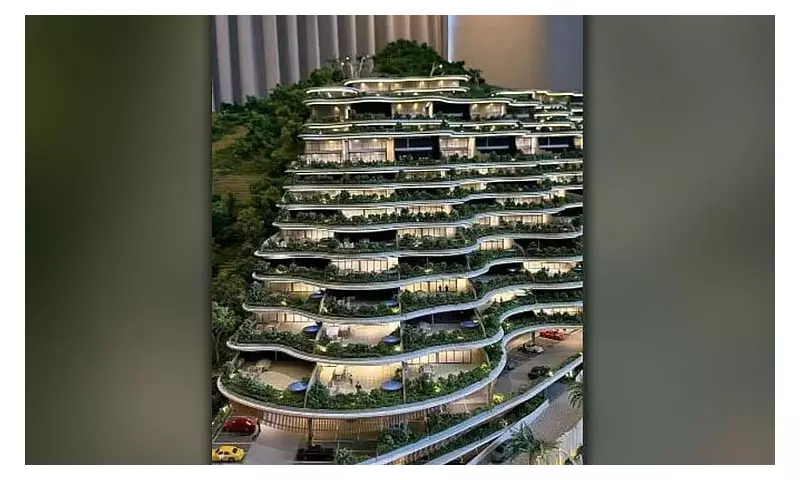
CEBU CITY - A major environmental controversy has erupted in Cebu City as Monterrazas de Cebu firmly denies allegations from the Department of Environment and Natural Resources (DENR) that the developer cut down more than 700 trees on its hillside property in Barangay Guadalupe.
The dispute comes at a sensitive time, emerging just days after Typhoon Tino's devastating floods swept through parts of Cebu, raising serious questions about how hillside developments might affect drainage patterns and public safety.
The DENR Investigation Findings
According to DENR inspections conducted on November 6 and 7, 2025, field personnel documented that only 11 trees remained at the Monterrazas development site. This finding stands in stark contrast to a 2022 tree inventory that had recorded 745 trees in the same area.

The preliminary DENR reports and subsequent social media discussions have suggested a potential connection between the tree removal and the severe flooding experienced during Typhoon Tino. Local residents have expressed concerns that the combination of tree cutting and slope modifications may have increased surface runoff and contributed to downstream flooding in vulnerable communities.
The DENR is also examining whether the developer's earthmoving activities and slope alterations violated the conditions of their Environmental Compliance Certificate (ECC) and approved site development plans.
Developer's Strong Rebuttal
Monterrazas de Cebu has issued a forceful response to the allegations, calling the DENR's claims "grievously false" and "premature." In an official statement, the company declared: "We categorically refute premature pronouncements by the DENR regarding alleged tree cutting activities. The claim that Monterrazas de Cebu cut down more than 700 trees is grievously false, and we are confident that any evidence that may be presented to assert this narrative can easily be disproven."
The developer clarified that their permits authorized only the clearing of shrubs and secondary undergrowth, not mature trees. They referenced an Environmental Impact Statement submitted to DENR-Environmental Management Bureau (EMB) 7 that described the site as consisting mainly of grass, shrubs, and small plants with "minimal to no topsoil," making the land unsuitable for agricultural purposes.
Addressing flood concerns directly, Monterrazas emphasized that their development site in Barangay Guadalupe lies several kilometers from the heavily flooded areas of Liloan, Mandaue, and Talisay, which belong to different drainage basins. The company stated they actually exceeded DENR requirements for stormwater management by constructing a detention system with 40,413 cubic meters of capacity - 51 percent more than the required 26,701 cubic meters.
Wider Implications for Cebu
The outcome of this investigation carries significant consequences for environmental regulation and urban development in Cebu:
- Environmental Protection: Confirmed unauthorized tree cutting would represent a serious violation of environmental laws and ECC conditions, threatening hillside stability
- Public Safety: The case raises important questions about whether hillside developments contribute to downstream flooding through increased runoff
- Regulatory Enforcement: This situation tests DENR's capacity to hold powerful developers accountable for environmental compliance
A final technical report from DENR, incorporating findings from the Environmental Management Bureau and Mines and Geosciences Bureau, will ultimately determine what actually happened to the missing trees and whether slope modifications violated environmental regulations. The findings could lead to penalties, mandatory reforestation requirements, or slope reinforcement measures to address long-term environmental risks in Cebu City.