The Illusion of Sanitary Landfills in the Philippines
Cardinal Pablo Virgilio David has issued a stark critique of the so-called "sanitary landfills" operating across the Philippines, arguing that they fail to meet basic environmental standards. In reality, these facilities often function as unsanitary dumpsites, directly contradicting the intent of Republic Act 9003, the Ecological Solid Waste Management Act of 2000, which explicitly bans such practices.
What Defines a True Sanitary Landfill?
A genuine sanitary landfill is engineered with specific safeguards to protect the environment. Key features include:
- Impermeable liners: Thick rubber sheets designed to prevent leachate from seeping into soil and groundwater.
- Strict waste controls: Only residual waste—what remains after proper segregation—should be deposited, following ecologically sound solid waste management principles.
Ecologically sound solid waste management relies on a straightforward process: segregation, composting, and recycling. However, this system collapses without effective waste segregation at the source, making composting and recycling unfeasible.

The Ideal vs. The Reality
Proper waste management requires disciplined collection systems, including:
- Separate collection days for compostable biodegradables.
- Separate days for recyclables.
- Separate days for residual waste.
Toxic, industrial, and medical wastes must also be collected and treated independently. Yet, in most parts of the Philippines, the reality is far from this ideal. Waste streams are routinely mixed together, including biodegradables, recyclables, residuals, and hazardous materials. As a result, what are labeled "sanitary landfills" are, in truth, unsanitary landfills—dignified dumpsites that fill rapidly due to accepting all types of waste.
Corruption and Environmental Violations
The law clearly defines proper locations for sanitary landfills, but these regulations are frequently violated. Corruption and the ease of securing Environmental Compliance Certificates enable unsuitable sites, such as:
- Fishponds converted into landfills, like in Navotas, where leachate has poisoned fishponds along Manila Bay, devastated aquaculture in areas like Malabon, Obando, Hagonoy, and Paombong, and compromised food security.
- Reclamation areas filled with unsegregated garbage, raising questions about when such reckless projects will be deemed criminal acts.
Strong Laws, Weak Enforcement
The Philippines boasts a robust framework of environmental laws, including:
- Republic Act 9003 on solid waste management.
- Republic Act 8749 on air quality.
- Republic Act 9275 on water quality.
- Republic Act 6969 on hazardous and toxic wastes.
- Presidential Decree 1586 on environmental impact statements.
- Republic Act 9729 and 10121 on climate change and disaster risk reduction.
- Republic Act 7586 and 11038 on protected areas and biodiversity.
- Republic Act 8550 and 10654 on marine and coastal protection.
- Republic Act 9513 on renewable energy.
- Republic Act 9175 and 9147 on forests and wildlife.
Despite this comprehensive legal landscape, the country suffers from a lack of serious enforcement, political will, and ecological education. Hardly any local government unit achieves full compliance, allowing corruption to seep into soil, water, food, and human bodies.
A Warning for the Future
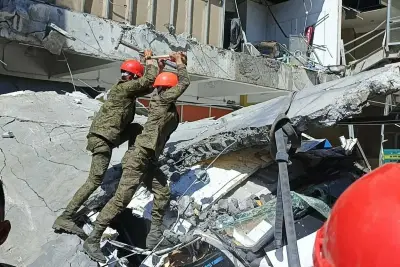
The tragedy in Cebu is not an isolated incident but a warning sign. Until the true meaning of "sanitary" is understood and enforced with honesty and courage, similar environmental disasters are bound to recur across the nation. The material consequences of corruption are evident, threatening public health and ecological stability.