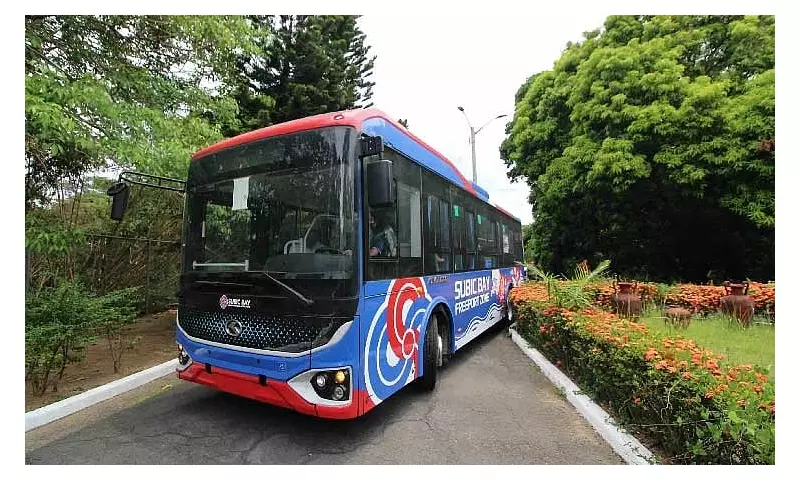
The Subic Bay Metropolitan Authority (SBMA) has taken a significant step towards a greener future by launching a trial run of electric buses within the Subic Bay Freeport Zone's Central Business District.
A Week-Long Dry Run for a Greener Tomorrow
From November 3 to 9, 2025, the SBMA conducted a dry run of its new electric bus fleet. During this testing period, passengers were able to ride the buses completely free of charge. The primary goal of this trial was to assess the real-world performance of the Pure Battery Electric Bus (PBEB) project under actual passenger conditions.
According to SBMA Deputy Administrator for Corporate Communications Armie Llamas, this week-long test provided a crucial opportunity for the agency to evaluate the efficiency, functionality, and all necessary support systems required for the full-scale operation of the e-buses.

Infrastructure and Investment for Sustainable Transit
Currently, four e-buses are operating along the Central Business District route. These vehicles are being tested for their charging capacity, route efficiency, and overall passenger comfort. This initial fleet is part of a larger consignment of ten electric buses that the SBMA received back in May 2025.
To support this new transport system, the SBMA has allocated ₱10 million for the construction of new bus stops and the rehabilitation of existing ones. A total of 58 bus stops will be installed throughout the Freeport, with their completion targeted for December 2025.
The planned locations for these stops are:
- Eight in the Central Business District (CBD)
- Sixteen in the Cubi area
- Six near theme parks
- Eighteen in the Binictican Housing area
- Ten in the Kalayaan Housing area
Driving Towards a Carbon-Neutral 2030
This electric bus initiative is a cornerstone of the SBMA's ambitious 'Race to Carbon Neutrality' campaign. The authority is steadfast in its goal of transforming the Subic Bay Freeport Zone into the country's first carbon-neutral economic zone by 2030.
The e-bus project is not the only sustainability effort underway. It is complemented by other major projects, including the ₱250-million Carbon Neutral Port project, which provides shore power connections for vessels docking in Subic, further reducing the area's carbon footprint.