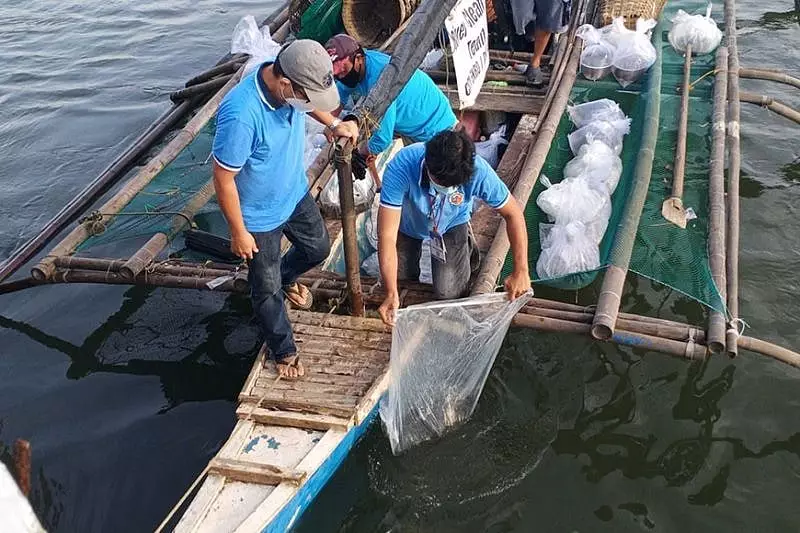
The Iloilo City Government has announced a significant four-month ban on all fishing activities in a key section of the Iloilo River, a move designed to revive aquatic life and support local livelihoods.
Key Details of the Fishing Closure
This closed fishing season is scheduled to be in effect from December 1, 2025, to March 31, 2026. The decision is grounded in a comprehensive, year-long study conducted by the Bureau of Fisheries and Aquatic Resources (BFAR), which identified the December to March period as the most crucial for the reproduction and growth of sea bass and other vital aquatic species in the river.
The restricted area spans approximately 2.7 kilometers of the river's total 13-kilometer length, specifically covering the segment from the Atty. Cesar M. Drilon Bridge to the Diversion Road Bridge.

Conservation Goals and Enforcement
City Agriculturist Iñigo Garingalao emphasized the ecological necessity of the measure, stating, "It is important that our fish will spawn in their natural manner." The primary objectives are fish stock restoration, livelihood improvement for fisherfolk, and river biodiversity conservation.
Ely Estante, the Executive Assistant for Agriculture and the ordinance's author, revealed that the legislation was initially focused solely on protecting the sea bass population. However, it was expanded to include other species with the broader, long-term goal of ensuring food security for the community.
To ensure compliance, the city government has coordinated with the Iloilo City Police, the Maritime Group of the Philippine National Police, and the Philippine Coast Guard. A structured penalty system for violators has been established:
- First offense: A fine of PHP 1,900 or community service.
- Second offense: A fine of PHP 2,000 or community service.
- Third offense: A fine of PHP 5,000, along with confiscation of the catch and fishing gear, and impoundment of the fishing boat.
A Step Towards Sustainable Fishing
This proactive initiative, formalized under Resolution No. 2025-027, represents a critical investment in the health of the Iloilo River's ecosystem. By allowing fish populations to breed and grow undisturbed during their most vulnerable period, the city aims to create a more sustainable and productive fishery for the future, balancing ecological needs with the economic well-being of its residents.