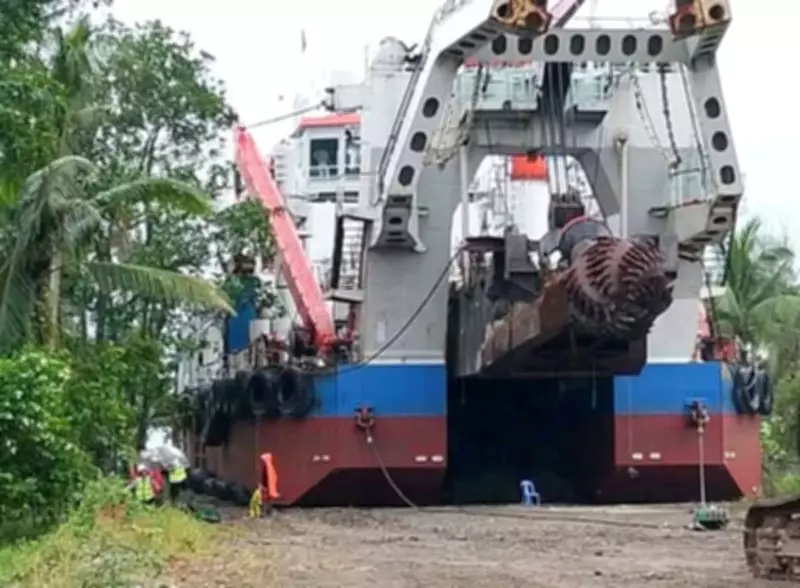
Residents of MacArthur, Leyte have intensified their resistance through sustained human barricades, protesting the entry of a massive dredging machine allegedly intended for black sand mining operations in their agricultural lands. The community's steadfast opposition highlights growing tensions between industrial development and environmental preservation in the region.
Farmers Fear Complete Loss of Livelihood
Jesus Cabias Jr., spokesperson for the peasant farmers, voiced profound concerns about the potential destruction of their rice fields and primary source of income. "Our fear is that our rice fields will be erased from the map," Cabias emphasized during an interview with SunStar Philippines, capturing the community's existential anxiety about their agricultural heritage.
The imposing dredging machine, described by Cabias as approximately six stories high, has been gradually advancing from the coastal area toward designated mining zones in Barangay Maya, MacArthur since January 2026. This slow but persistent movement has heightened residents' apprehension about imminent environmental damage.

Formal Appeals and Historical Context
Community members have submitted multiple petitions to various government officials, urgently requesting intervention to halt the mining operations. Their appeals stem from documented failures of the mining company to rehabilitate previously affected areas and inadequate monitoring mechanisms for environmental protection.
"We are not violent people. We just want the immediate help of our government over this issue," Cabias clarified in the vernacular on Tuesday, February 10, 2026, emphasizing the community's peaceful approach to seeking resolution.
In an open letter addressed to President Ferdinand Marcos Jr., residents revealed they have endured mining-related impacts for nine consecutive years. "Like many mining-affected communities, we have put up a barricade to show our strong opposition to mining operations that have devastated our farmlands and destroyed our environment," they declared on February 6.
Dire Consequences Without Intervention
The community outlined severe potential outcomes if mining operations proceed unchecked. "Without any intervention to stop these mining operations, we will eventually have no food to feed our families. We will lose our livelihoods and our source of income that sustain our households," residents warned in their appeal.
They further predicted worsening conditions, stating: "We will continue to live in precarious conditions, worsening our food insecurity. Our ecosystems will be further compromised as we suffer biodiversity loss and water pollution." The residents specifically requested presidential action through an executive order to terminate mining activities in their territory.
Local Government Response and Historical Precedent
Councilor Dominic Babante addressed the situation through a public social media post on February 9, asserting: "Our local government unit continues to listen to the voices of our people, and we remain committed to lawful actions that safeguard the welfare of MacArthur and its residents."
Babante clarified the administrative status, noting: "We also inform the public that the mayor has not issued a business permit for the mining operation here in MacArthur, Leyte, despite having complete documents from national agencies." He added that local authorities are "still reviewing the legal process to determine the appropriate actions our local government can take in this situation."
This conflict echoes historical environmental challenges for MacArthur, a fifth-class municipality named after American General Douglas MacArthur. The town gained national attention in 2012 when a devastating fish kill occurred in its lake, an event villagers attributed to mining activities that severely impacted local livelihoods.
Mining Operations and Economic Considerations
Approximately 2,000 hectares of mining claims have reportedly been granted by the National Government to MacArthur Iron Sand Projects Corporation (MIPC), which operates as the local arm of Strong Built Mining Development Corporation. The mining project's scope extends beyond MacArthur to include nearby Abuyog and Javier municipalities.

In 2021, MIPC employed around 300 local workers in MacArthur while publicly asserting that it has "performed our business operations within the bounds of law." This economic dimension adds complexity to the ongoing debate about balancing job creation with environmental protection.
Black sand, the mineral targeted by these operations, holds significant commercial value for manufacturing concrete, steel, cosmetics, jewelry, and various industrial products. This economic incentive contrasts sharply with residents' concerns about permanent agricultural and environmental damage.
The standoff in MacArthur represents a critical test case for Philippine environmental governance, community rights, and sustainable development policies as residents continue their peaceful resistance against what they perceive as existential threats to their way of life.