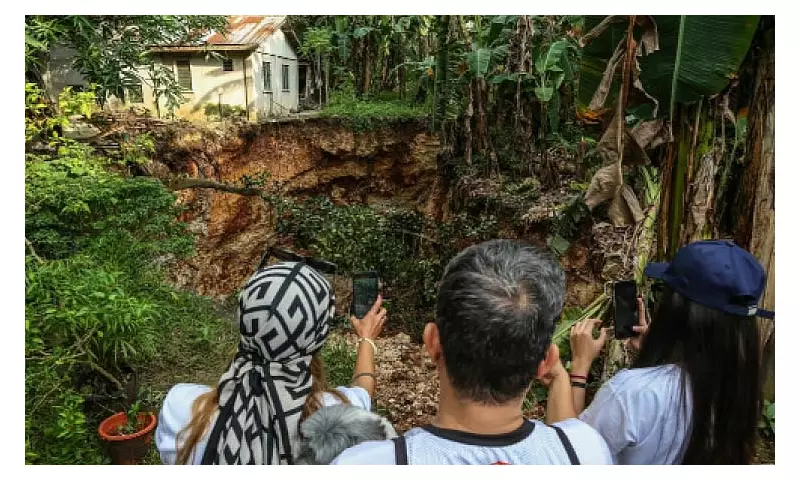
The municipality of San Remigio in Cebu has initiated a massive relocation effort affecting approximately 1,000 residents after officials identified more than 60 sinkholes that appeared following the powerful magnitude 6.9 earthquake that struck the province on September 30, 2025.
Emergency Declaration and Relocation Efforts
Mayor Mariano Martinez announced during a press conference on Thursday, November 27, 2025, that the discovered sinkholes located near residential areas have prompted the immediate declaration of these zones as "no-build zones." This declaration has forced the local government to relocate affected families to government Smart Houses or temporary shelters.
"These sinkholes near residential areas are now considered a no-build zone. Therefore, we really need to evacuate them. This is a problem that we need to solve because we absolutely must move them," Martinez stated during the announcement.

The local government estimates that between 200 to 250 families have been directly affected by the sinkhole formations, presenting one of the most significant challenges currently facing the Local Government Unit (LGU).
Ongoing Challenges and Resident Resistance
Despite the evident danger, some residents have chosen to remain in their homes, refusing to relocate despite persistent efforts by authorities to ensure their safety. This resistance complicates the already challenging relocation process.
Municipal officials are now developing plans to purchase land for displaced families and are considering additional lots for those who wish to remain close to their livelihoods. However, Mayor Martinez emphasized that securing funding remains a primary challenge in the relocation process.
The mayor expressed hope that, similar to the response after Typhoon Yolanda, foreign or non-government organizations (NGOs) might assist in housing construction for the affected families.
Geological Impact and Continuing Dangers
Even months after the initial September 30 earthquake, San Remigio continues to face multiple challenges, including frequent though less intense aftershocks and the ongoing discovery of additional sinkholes.
Officials now estimate that the total number of sinkholes could reach approximately 100, according to Martinez, who noted that many undocumented sinkholes are appearing in non-cemented interior areas that are difficult to monitor.
Martinez explained that some sinkholes began as small holes that gradually expanded due to continuing aftershocks. The number of sinkholes that have collapsed into large cavities has also increased significantly.
The magnitude 6.9 earthquake in September, one of the strongest to hit Cebu in several decades, caused widespread damage throughout the province, including collapsed infrastructure, landslides, and the formation of these dangerous sinkholes.
According to the Department of Environment and Natural Resources - Mines and Geosciences Bureau (DENR-MGB), sinkholes are depressions or holes in the ground that result from the collapse of surface layers, often accelerated by heavy rain, earthquakes, or natural underground erosion.
In San Remigio, geologists have indicated that the combination of seismic tremors and unstable limestone soil likely contributed to the formation of these numerous sinkholes that now threaten community safety.