A massive relocation effort is underway in San Remigio, Cebu, where approximately 1,000 residents are being forced from their homes not by flood or fire, but by the very ground collapsing beneath them. This unprecedented situation stems from a powerful earthquake that has transformed stable neighborhoods into dangerous sinkhole zones.
Earthquake Reveals Hidden Geological Dangers
The crisis began on September 30, 2025, when a magnitude 6.9 earthquake - one of the strongest to hit Cebu in decades - struck the region. While initial damage assessments focused on visible destruction, the true danger emerged gradually as the earth began opening up across residential areas.
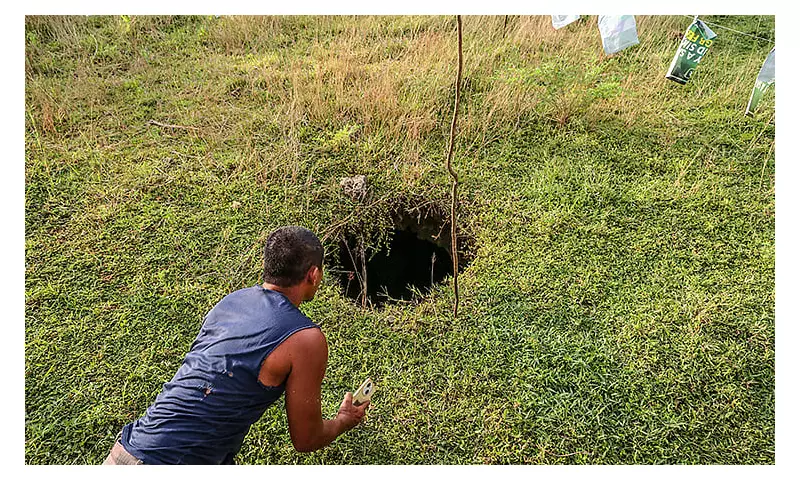
Officials have now identified over 60 earthquake-induced sinkholes throughout San Remigio, with projections suggesting the number could eventually reach 100. The situation remains dynamic, with ongoing aftershocks causing existing fissures to expand and new ones to form, creating an ever-shifting landscape of danger.

No-Build Zones Force Painful Decisions
In response to the geological threat, local authorities have taken the drastic step of declaring multiple residential neighborhoods as permanent "no-build zones." This designation affects 200 to 250 families who must abandon their properties and relocate to government-provided Smart Houses or temporary shelters.
San Remigio Mayor Mariano Martinez acknowledged the emotional difficulty of this decision, noting that some residents are resisting relocation despite the clear dangers. "It's a problem we have yet to resolve because we really need to transfer them," Martinez stated, highlighting the complex balance between safety concerns and residents' deep connections to their homes and livelihoods.
The Science Behind the Sinkholes
The sudden appearance of dozens of sinkholes isn't random bad luck but rather the result of Cebu's underlying geology. The island features karst terrain, characterized by soluble limestone that's naturally prone to collapse. According to geologists from the Mines and Geosciences Bureau (MGB), the powerful seismic tremors from the September earthquake destabilized this already vulnerable underground structure.
What began as small surface openings has evolved into significant collapse features, some expanding into large holes that render the land fundamentally unsafe for human habitation. The MGB emphasizes that areas experiencing such geological failures cannot safely support structures, making traditional rebuilding impossible.
Logistical and Financial Challenges Multiply
The relocation effort presents enormous logistical and financial hurdles for the local government. The primary challenge involves purchasing new, safe land for hundreds of displaced families, a massive undertaking that exceeds the municipality's resources.
Mayor Martinez has expressed hope that external assistance, similar to the international response following Typhoon Yolanda, might help fund permanent housing solutions. The local government is considering multiple relocation sites to accommodate residents who wish to remain near their original livelihoods, adding complexity to an already difficult resettlement process.
Broader Implications for Disaster Management
The San Remigio situation represents a cascading hazard scenario that's becoming increasingly relevant in geologically vulnerable regions like the Philippines. What begins as an earthquake (primary hazard) triggers secondary geological events (sinkholes) that multiply the overall impact and complicate recovery efforts.
This case demonstrates how traditional disaster response models, focused on rebuilding in place, become inadequate when the land itself becomes the threat. The crisis forces a shift toward more complex solutions involving permanent resettlement and revised land-use planning.
As San Remigio officials work to secure funding and acquire suitable land, the entire province watches closely. The outcome will set important precedents for how Philippine communities manage large-scale relocations driven by invisible geological threats, potentially informing future responses to similar crises across vulnerable regions.