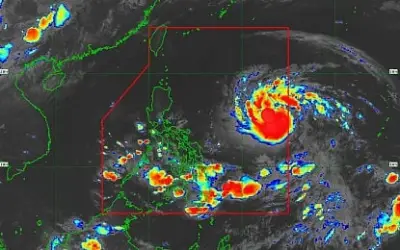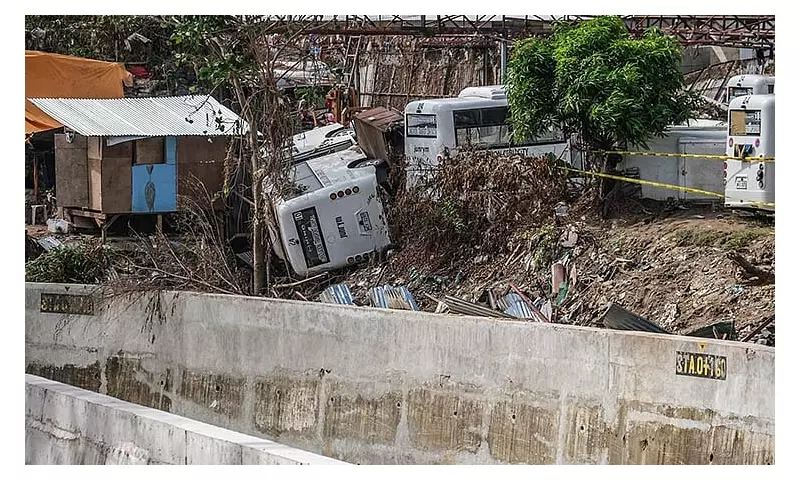
CEBU CITY - More than 300 public utility vehicles (PUVs) across Metro Cebu remain out of operation nearly three weeks after Typhoon Tino's devastating floods submerged numerous transport units on November 4, 2025.
Extensive Vehicle Damage and Operational Impact
Eduardo Montealto Jr., director of the Land Transportation Franchising and Regulatory Board (LTFRB) 7, revealed on Thursday, November 20, 2025, that transportation services have been severely affected by the substantial number of flooded vehicles, particularly those belonging to transport cooperatives in Cebu.
The official data collected by LTFRB 7 since November 6 shows that 324 vehicles suffered flood damage, comprising 187 taxis, 122 modern jeepneys (MPUJs), and 15 Transport Network Vehicle Service (TNVS) units.

Most of the submerged vehicles were parked in cooperative garages in Mandaue City when the Butuanon River overflowed during the typhoon. Additional units in northern Cebu and Talisay City were also affected by the severe weather system.
Critical Route Disruptions and Recovery Efforts
The most severely impacted route has been the 01K Parkmall to Urgello corridor, which previously operated with 110 MPUJ units but now functions with only 56 vehicles. Routes connecting Talisay City and Consolacion to Cebu City have also experienced significant disruptions, along with nearly all units in northern Cebu, particularly in Liloan and Danao.
Despite the extensive damage, Montealto confirmed that sufficient MPUJ supply remains available in Cebu for operators to deploy backup units while damaged vehicles undergo repairs. Approximately 20% of the total fleet, or 400 out of 2,100 units, remain on standby status.
The LTFRB has initiated special permits to assist operators facing vehicle shortages. However, Montealto emphasized that restoring flooded vehicles to operational condition will require substantial time, as many need complete engine replacements.
Compounding Driver Shortage Crisis
Beyond vehicle damage, Montealto highlighted the persistent driver shortage problem that has worsened following the magnitude 6.9 earthquake and subsequent typhoon.
During a November 19 meeting with operators, LTFRB 7 identified driver scarcity as the primary concern disrupting public transportation services. Initially, 18 drivers were affected by the earthquake, with numbers increasing significantly after Typhoon Tino.
Currently, 150 available units remain idle due to driver unavailability, with many drivers themselves becoming disaster victims.
Commuters Face Extended Wait Times
Regular commuters have reported dramatically increased waiting times for PUVs and ride-hailing services since Typhoon Tino struck Cebu on November 4.
Marshanell Villegas, a commuter traveling from Mactan, Lapu-Lapu City to Ayala Center Cebu, told SunStar on Wednesday, November 19, that some days require excessively long waits for jeepneys, causing work tardiness.
"The waiting line at Pacific Mall terminal has become extremely long after Typhoon Tino," Villegas explained, "and traffic congestion from the terminal to the Cebu-Mactan Bridge can last two hours during peak periods."
She now prefers taking buses directly to Mactan rather than relying on PUVs and MPUVs, which often become overcrowded and uncomfortable.
Cedric Cañal shared his experience of waiting 40 minutes for a ride-hailing service during rush hour while hurrying to an event. Despite offering a P200 tip through the app to attract drivers, he failed to secure transportation and ultimately resorted to a habal-habal motorcycle, paying significantly more than usual.
"Before the typhoon, booking was much easier," Cañal noted, "but now waiting times have become a major problem."
John Victor Geneyas observed that public transportation vehicles remain scarce even during light traffic periods, particularly on routes to Lapu-Lapu City and Mandaue City. Consequently, he now depends exclusively on ride-hailing apps for work commutes.

Maria Diana confirmed that ride-hailing apps now experience extended waiting periods of up to thirty minutes for bookings post-typhoon, compared to the previous average of five minutes. She avoids commuting via MPUVs during rush hours due to their scarcity and severe traffic congestion in Minglanilla and Cebu City.