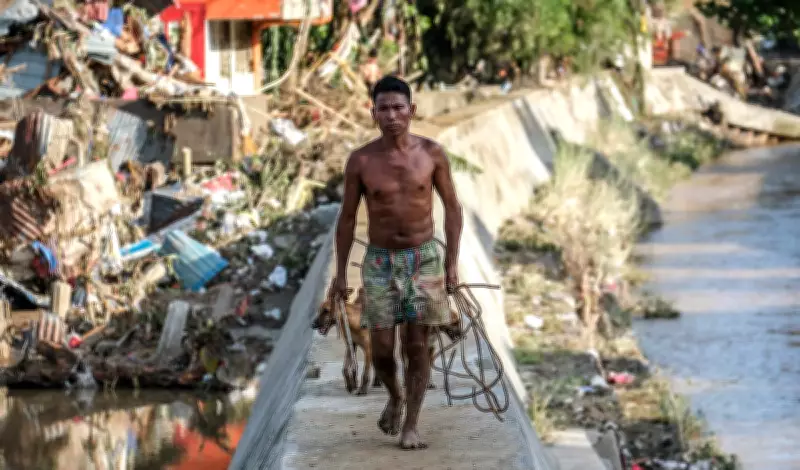
More than 8,000 survivors displaced by Typhoon Tino remain in evacuation centers across Central Visayas months after the storm struck, according to data released by the Department of Social Welfare and Development (DSWD) on May 13, 2026.
Evacuation Center Data
The DSWD said 2,034 families, or 8,339 individuals, are staying in 46 evacuation centers across the region. While Bohol no longer has displaced residents inside official shelters, Cebu continues to house 6,796 evacuees.
Based on Disaster Response Operations Monitoring and Information Center (Dromic) Report No. 76, Talisay City recorded the highest number of evacuees in Cebu with 5,419 individuals staying in 18 evacuation centers.

Cebu City had 1,199 evacuees in 11 centers, followed by Liloan with 481 individuals in five centers, Mandaue City with 344 individuals in two centers, and Consolacion with 318 individuals in two centers.
The City of Naga recorded 255 evacuees in one center, while Asturias had 199 individuals in two centers. Compostela listed 81 evacuees in three centers, and Tuburan had 43 individuals in one center.
Home-Based Displacement
The DSWD also reported that more displaced families are staying with relatives and friends instead of government-run shelters.
Across Central Visayas, 5,482 families, or 19,992 individuals, are living in temporary home-based arrangements. Cebu accounted for 5,419 families, or 19,353 individuals, of the total.
Alcoy recorded the highest number of home-based evacuees with 14,801 individuals from 4,235 families. Badian followed with 2,698 individuals from 739 families, while Liloan listed 1,734 individuals from 413 families. Medellin recorded 120 displaced individuals from 32 families.
In Bohol, all 63 displaced families, or 239 individuals, were staying in Trinidad.
Overall Displacement
Overall, Typhoon Tino displaced 7,516 families, or 27,931 individuals, across Central Visayas. Cebu accounted for 7,059 displaced families, or 26,149 individuals, while Bohol recorded 63 displaced families in Trinidad.
The DSWD attributed the prolonged displacement to extensive housing damage caused by the typhoon.
In Central Visayas, authorities recorded 24,546 partially damaged houses and 248,253 totally damaged homes. Cebu sustained the heaviest damage with 152,088 totally damaged houses and 15,697 partially damaged homes.
Government Assistance
The government has distributed more than P3 billion in assistance nationwide to support affected families.
In Central Visayas alone, the DSWD released P1.31 billion in relief assistance, along with an additional P22.4 million from other funding sources.
Cebu received P927.8 million in DSWD assistance and P9.6 million from external partners, while Bohol received P46.4 million in aid.
Typhoon Impact
Typhoon Tino entered the Philippine Area of Responsibility in November 2025 and triggered flooding, flash floods and landslides across several regions in the country.
Affected areas included the National Capital Region, Calabarzon, Mimaropa, Bicol Region, Western Visayas, Eastern Visayas, Zamboanga Peninsula, Northern Mindanao, Caraga, the Bangsamoro Autonomous Region in Muslim Mindanao and the Negros Island Region.
Dromic, under the DSWD’s Disaster Response Management Bureau, continues to monitor displacement data and coordinate disaster response reporting as recovery operations continue across affected communities.