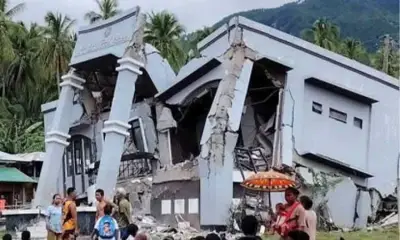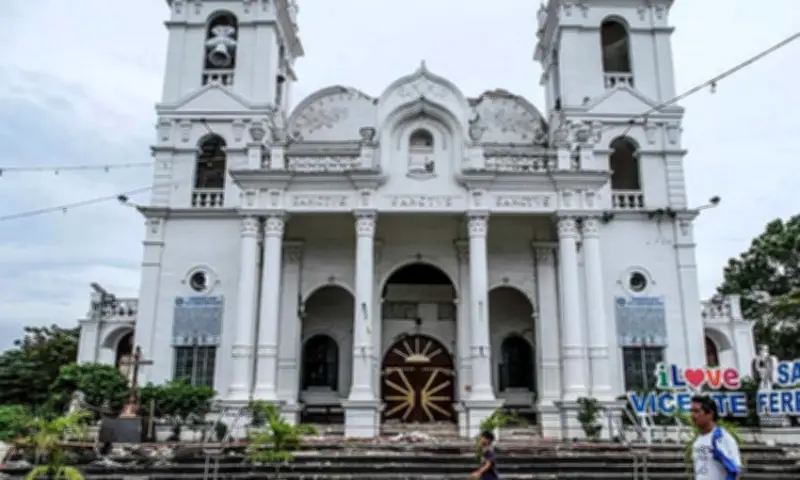
More than eight months after a magnitude 6.9 earthquake struck northern Cebu, Bogo City remains in a slow recovery process, with homes, schools, and public buildings still awaiting full rehabilitation. The quake, which occurred on September 30, 2025, caused widespread damage across the region, leaving many families struggling to rebuild their lives.
Cash Assistance for Affected Families
On June 3, 2026, Governor Pamela Baricuatro distributed P10,000 each to 3,215 families in Bogo City, totaling over P32 million in provincial financial assistance. The distribution was held at the Don Celestino Martinez Sr. Sports Complex in Barangay Taytayan. Among the recipients was Ricardo Dela Cerna, 62, whose home was destroyed by the earthquake. He suffered a series of heart attacks after the disaster, making recovery even more difficult. “Until now, our house is still damaged, but thanks to our beloved governor, I now have a budget for the repair,” Dela Cerna said in Cebuano.
Another recipient, Juliet Salonoy, 50, expressed gratitude for the aid, noting that many families continue to live in partially repaired homes or temporary shelters. She also reported that thieves have targeted empty houses while residents carry out repairs. “No matter how big or small the support is, we are glad to take it,” Salonoy said in Cebuano.

Rehabilitation Challenges
Mayor Maria Cielo “Mayel” Martinez said the City Government had hoped to move faster in rehabilitation but was slowed by persistent aftershocks in the months after the disaster. The scale of damage requires a large workforce, and the city has hired additional engineers but continues to face manpower shortages. Experts advised waiting at least six months before starting major rebuilding work. With eight months now passed, Martinez hopes reconstruction projects will accelerate.
Quake Impact and Damage Assessment
The earthquake struck at 9:59 p.m. on September 30, 2025, with its epicenter about 19 kilometers northeast of Bogo City. The Philippine Institute of Volcanology and Seismology (Phivolcs) placed its depth at five kilometers and attributed the quake to the Bogo Bay Fault, a newly identified fault. The shallow offshore quake caused strong shaking across Cebu and nearby provinces. Bogo City and the towns of San Remigio, Medellin, Tabogon, Sogod, Tabuelan, and Daanbantayan were among the hardest-hit areas. The National Disaster Risk Reduction and Management Council reported 79 deaths and 559 injuries, all in Central Visayas. In Bogo City alone, 38 buildings were damaged, with rehabilitation needs estimated at P963.78 million, according to a January report by the Provincial Government’s Public Information Office.
Recovery Program for Northern Cebu
Bogo City’s rehabilitation is part of a broader recovery program for northern Cebu. On January 30, the Provincial Government presented a P708.1 million three-year comprehensive rehabilitation and recovery plan. Of this, P311 million was allocated for agriculture and fisheries, P254.1 million for the repair of 13 damaged bridges, and P143 million for tourism recovery. The post-disaster needs assessment from November 21 to December 15, 2025, placed damage in northern Cebu at P9.24 billion and economic losses at P47.74 billion, with recovery and rehabilitation needs estimated at P19.23 billion.
The financial assistance distributed in Bogo City is part of the province’s ongoing recovery program. Families in Medellin and Daanbantayan received the same P10,000 cash assistance in previous distributions. Provincial officials said the distribution will continue in neighboring towns. The aid came from the province’s funds earmarked for disaster response and recovery, complementing assistance from national government agencies and humanitarian groups. The release of assistance underwent validation and documentation from November 2025 to April 2026. The total budget allocated for northern Cebu is P473.58 million.

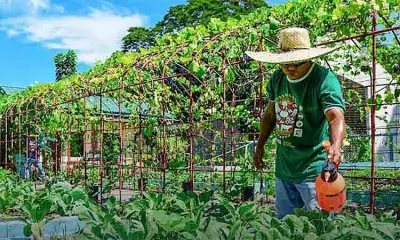
During the distribution, Governor Pamela Baricuatro assured beneficiaries that the Provincial Government will continue helping affected communities recover and rebuild. Bogo City will also receive 1,000 packs of assorted vegetable seeds, 500 grafted calamansi seedlings, 20 rolls of screen for fish pots, 50 packs of mango fertilizer, 50 bags of hybrid yellow corn, 10 carabaos, and 10 goats, to be turned over to the Bogo City Government.
Impact on Schools and Homes
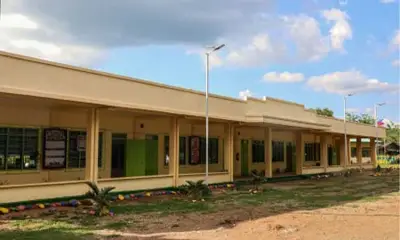
As public school classes are set to resume on June 8, the education sector remains among the hardest hit. At least two schools in Bogo City are classified as totally damaged, and many others require repairs. Mayor Martinez said schools have adopted shifting schedules with separate morning and afternoon sessions. In damaged schools, including one in Sitio Cambado, Barangay Guadalupe, students rely on modular learning. Temporary learning shelters have allowed schools to conduct classes. Assessments of school buildings showed other concerns, including structures that may need to be demolished due to fault line activity. With 38 schools across Bogo City, rehabilitation will take time. Teachers have set up temporary learning shelters with help from private organizations.
On the issue of displaced residents, Martinez said she has not received reports of families unable to return to their homes. The City Government has distributed building materials to 1,000 families to support home repairs and reconstruction. Families who had no shelter were offered housing assistance in Barangay Banban. “So far, no one has approached me saying they have nowhere to stay,” Martinez said in Cebuano. “The City Government has been very proactive.”
City Hall Repair
The rehabilitation plan for Bogo City Hall is moving forward, with officials set to discuss a revised design and project costing. Martinez said the first draft of the proposed improvements had been reviewed, and the revised second draft was scheduled to be presented on June 4. The redesign takes into account the transfer of the Municipal Council to a newly constructed building, which changes the original floor plan. With the SP no longer occupying space in City Hall, the layout has been revised to reflect the updated use of the facility.
For survivors like Dela Cerna and Salonoy, the assistance does not end the hardship caused by the earthquake, but it gives families another way to continue rebuilding after months of uncertainty.