The provincial government of Cebu has officially allocated an initial sum of P708.1 million to support the three-year Comprehensive Rehabilitation and Recovery Plan for northern Cebu. This substantial financial commitment was announced during a meeting of the Provincial Disaster Risk Reduction and Management Council (PDRRMC), held at the Capitol on Friday, January 30, 2026.
Major Funding Breakdown for Key Sectors
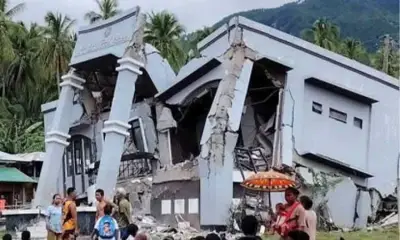
This allocation represents a crucial first step in a much broader rebuilding initiative, which is projected to require approximately P19.28 billion, or nearly P20 billion, in total funding from combined provincial and national government sources. The massive effort is a direct response to the severe devastation caused by the powerful magnitude 6.9 earthquake that struck the region on September 30, 2025.
The meeting was presided over by Cebu Governor Pamela Baricuatro and attended by Capitol department heads, various regional agency representatives, and mayors from the affected northern Cebu municipalities as invited guests.

Detailed Distribution of the Initial P708.1 Million Fund
Of the total P708.1 million initial fund, the provincial government has outlined a clear distribution strategy to address the most pressing needs:
- P311 million is designated for agriculture and fisheries support, sectors vital to the local economy and food security.
- P254.1 million is allocated for the urgent repair and reconstruction of 13 damaged bridges, which are critical for transportation and connectivity.
- P143 million is committed to reviving the tourism industry, an economic sector that suffered tremendously from the disaster's impact.
Building Back Better and Smarter Framework
According to Dennis Francis Pastor, the head of the Provincial Disaster Risk Reduction and Management Office (PDRRMO), the province's recovery roadmap is firmly grounded in the "Build Back Better and Smarter" framework. This approach aims not only to address immediate rehabilitation necessities but also to significantly strengthen the region's resilience and capacity to withstand future calamities.
A central focus of the PDRRMC meeting was the presentation of the comprehensive Post-Disaster Needs Assessment (PDNA), which was conducted from November 21 to December 15, 2025.
Post-Disaster Assessment Reveals Extensive Damage and Losses
The PDNA findings paint a stark picture of the earthquake's aftermath. Northern Cebu experienced an estimated P9.24 billion in physical damage, affecting a wide array of sectors including infrastructure, housing, education, health services, agriculture, fisheries, tourism, and environmental management.
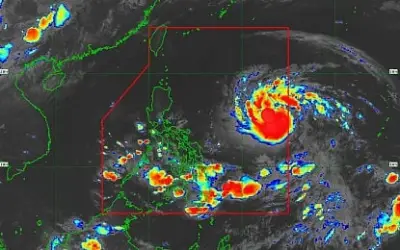
Beyond the immediate physical destruction, the seismic event also resulted in staggering P47.74 billion in economic losses, highlighting the prolonged disruption to production capabilities and essential services across the region. Overall, the PDNA estimates that the total cost for recovery and rehabilitation efforts will range between P19.23 billion and P19.28 billion. This figure does not yet account for additional damages inflicted by Typhoon Tino.
Provincial Intervention in Education Infrastructure
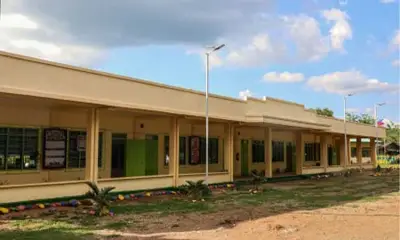
A key component of the provincial government's intervention strategy involves the construction of new, modern classrooms and the establishment of 269 Temporary Learning Shelters (TLS) across 34 municipalities. These areas have been officially identified by the Department of Education as severely impacted by the earthquake.
Governor Pamela Baricuatro, who also chairs the Provincial School Board, emphasized that the new permanent classrooms will be designed as smart and climate-proof structures. They will be engineered to withstand seismic activity, flooding, and fire hazards, ensuring greater safety and durability.
The construction of these permanent classrooms is expected to be completed within a timeline of two to three months. Meanwhile, the Temporary Learning Shelters are targeted for completion within one month to guarantee they are fully prepared and operational for the scheduled school opening in June 2026.