Cebu Takes Proactive Step in Disaster Risk Management
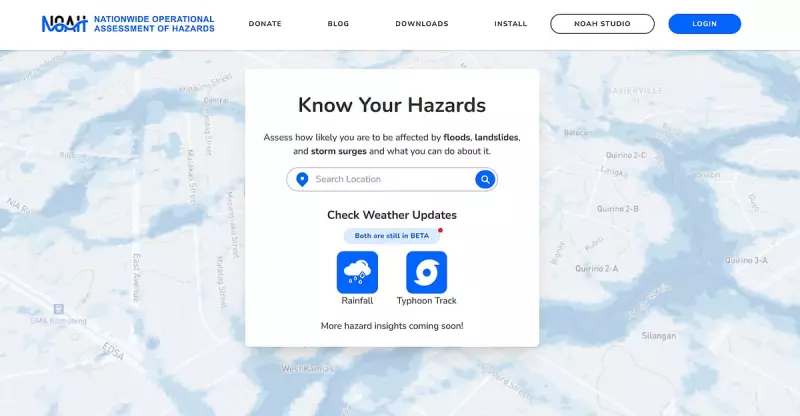
The Cebu Provincial Government has unveiled plans to revitalize Project NOAH (Nationwide Operational Assessment of Hazards), a significant disaster preparedness and hazard-mapping program originally implemented during former governor Hilario Davide III's administration. This move aims to address the substantial changes in the province's landscape since the project's initial data collection.
Balancing Development and Environmental Protection
In an interview on Monday, November 10, 2025, Cebu Province Assistant Administrator Aldwin Empaces revealed that nearly 30 percent of Cebu's 28,000 hectares of protected landscape has been converted for alternative uses. "Almost 10,000 hectares are now being used for different purposes. This means they are no longer really protected areas," Empaces stated, speaking in a mix of Cebuano and English.
He specifically identified areas in Barangays Sudlon and Bonbon where forest cover has been replaced by agricultural activities. "There are already crops planted there and fewer trees. But we cannot simply take away people's livelihoods," Empaces acknowledged, emphasizing the need for balanced approach to development and ecological sustainability.

Scientific Approach to Quarry Operations and Permitting
The provincial government's commitment to evidence-based decision-making became evident through Governor Pamela Baricuatro's recent actions. On July 28, the governor ordered a comprehensive review of quarry operations, leading to the 30-day suspension of 10 quarry operators and nine special disposal permit holders following complaints about their poor operations.
This regulatory action intensified in September when the Provincial Environment and Natural Resources Office (PENRO) formally issued cease and desist orders against 19 companies holding quarry and special disposal permits throughout Cebu Province.
Empaces explained the connection to Project NOAH: "Now you understand why the Governor reviewed the quarry operations for a month. It's important that before issuing permits, we check whether the area is within the hazard map and what risks are involved. We have to be scientific and evidence-based when making decisions."
Collaboration with UP Resilience Institute
The Provincial Disaster Risk Reduction and Management Office (PDRRMO) is now coordinating with the University of the Philippines Resilience Institute to review and update the previous Project NOAH data from 2017 and 2018. "The landscape has changed since 2017 and 2018, so we have to seek the help of the UP Resilience Institute to review Project NOAH," Empaces confirmed.
The Provincial Capitol has already contacted Project NOAH Executive Director Mahar Lagmay to facilitate this collaboration. Project NOAH, established in 2011 during the administration of President Benigno "Noynoy" Aquino III, served as the country's flagship disaster risk reduction program under the Department of Science and Technology (DOST) before being defunded in 2017 during the Duterte administration.
Empaces recalled that the Provincial Government under Davide initially funded Cebu's participation in Project NOAH as part of recovery efforts following the devastation caused by Typhoon Yolanda in November 2013. The program continues under University of the Philippines management as the UP NOAH Center.