The Department of Human Settlements and Urban Development has delivered crucial emergency shelter materials to Davao Oriental province, providing immediate relief to families displaced by recent twin earthquakes that rocked the region.
Emergency Shelter Support Deployed
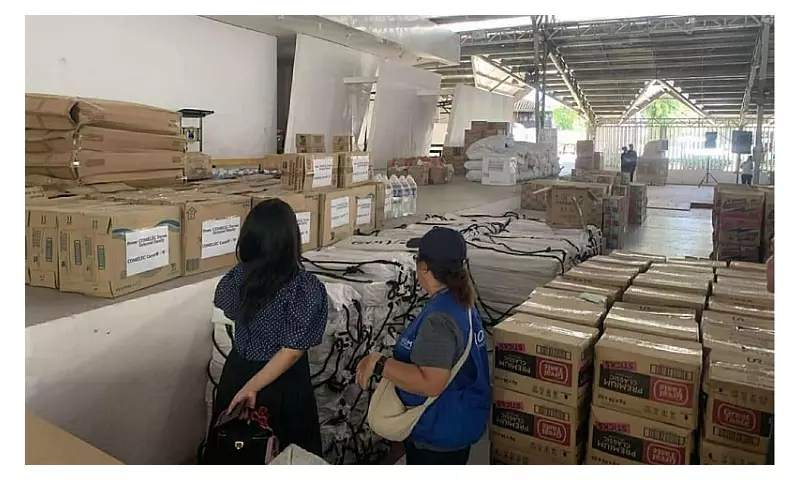
On October 16, 2025, DHSUD turned over 200 tents, 500 fixing kits, and 300 shelter-grade tarpaulins to the Davao Oriental provincial government. These essential materials will serve as temporary shelters for families who lost their homes during the destructive seismic events that struck the province last week.
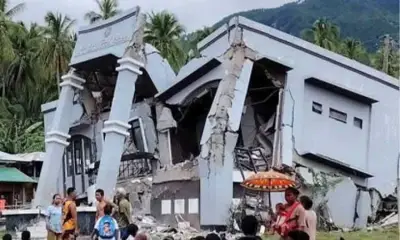
According to Francis Jason Bendulo, Assistant Department Head of the Provincial Disaster Risk Reduction and Management Office, the earthquakes have affected 212,375 families across the province. The disaster caused severe structural damage, with 1,318 houses completely destroyed and 19,427 partially damaged.

Bendulo confirmed that 152 families remain displaced and are currently staying in tent cities established in Manay, Tarragona, and Caraga municipalities. The human toll stands at four confirmed deaths and 289 injuries resulting from the twin earthquakes.
Price Freeze Extended for Consumer Protection
In parallel relief efforts, the Department of Trade and Industry-Davao Region announced that the price freeze in Davao Oriental will be extended from December 12, 2025, until January 6, 2026. This measure aims to protect consumers from price gouging during the recovery period.
DTI Provincial Director Joycelyn F. Bansalan explained that the price freeze was originally set to end on December 12, 2025, after beginning on October 13, 2025, following the provincial declaration of a state of calamity. However, President Ferdinand "Bongbong" Marcos Jr.'s declaration placing the entire Philippines under a State of National Calamity triggered an automatic extension of the price control measures.
"We are continuously monitoring our prices, and please be assured that if anyone violates the price freeze, we will automatically issue a show-cause order," Bansalan stated during the Davao Oriental Integrated Media Press Conference on November 19, 2025.
The DTI has already taken enforcement action, issuing 14 show-cause orders for violations recorded between October 12 and November 14, 2025. These violations were distributed across multiple areas: five in Mati City, four in Lupon, two in Caraga, and one in Boston.
Business Sector Impact and Recovery Plans
The earthquakes have significantly impacted local businesses, with the Rapid Damage Assessment and Needs Analysis revealing that 145 establishments sustained damage. Of these affected businesses, 57 experienced partial damage, 139 remain operational, and six are currently non-operational.
The value of damaged stocks throughout the province has reached ₱2,929,764, creating substantial financial losses for local entrepreneurs. Bansalan indicated that the DTI is currently assessing what type of intervention would be most effective for business recovery.
Through the Pangkabuhayan sa Pagbangon at Ginhawa program, the DTI will conduct profiling and needs assessments, distribute livelihood kits, and offer entrepreneurship training to help affected businesses rebuild and recover.
Beyond immediate shelter and economic concerns, the Provincial Disaster Risk Reduction and Management Office reported public health challenges following the earthquakes. The office recorded cases of acute diarrhea in Manay from October 13 through November 2025, prompting immediate water sampling and necessary interventions to ensure community health and safety.

Looking forward, disaster management officials plan to conduct a Regional Project Validation and Evaluation Team assessment in coordination with the Office of Civil Defense-Davao Region. Additional recovery measures include pursuing on-site relocation for internally displaced individuals, procuring water filtration machines, providing enhanced support to barangay health workers, establishing a comprehensive disaster data management system, and conducting continuous monitoring of local government units while offering additional training in Disaster Risk Reduction and Management.