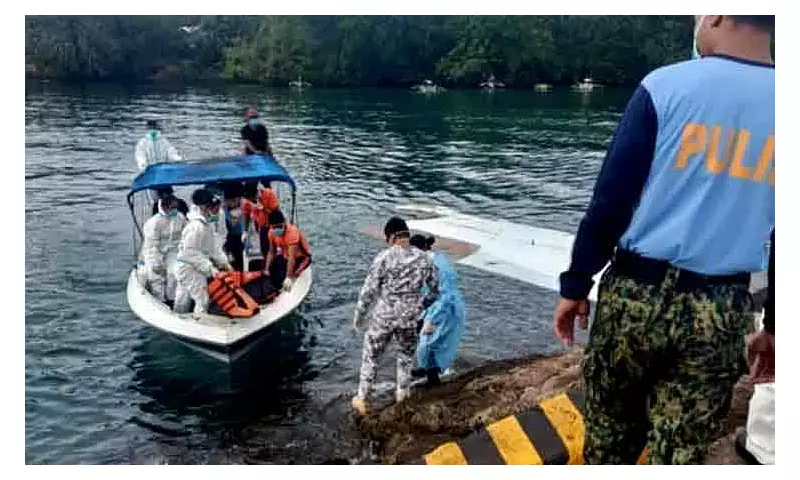
Philippine Navy Ship PS37 delivered another body, believed to be among the passengers of the sunken recreational dive boat MBCA Amejara, to Balut Island in Sarangani, Davao Occidental on the morning of Sunday, January 25, 2026. This recovery brings the total number of bodies retrieved to five, with four of these already transported to Davao City earlier that same day for comprehensive forensic examination and identification procedures.
Maritime Tragedy Amid Peak Amihan Conditions
The MBCA Amejara met with disaster on Monday, January 19, 2026, while navigating the Davao Gulf. Reports indicate the vessel, carrying approximately 15 passengers including recreational divers and crew members, departed without proper clearance and encountered rough seas and strong currents. A passenger was rescued at sea the following day, Tuesday, January 20, highlighting the challenging search-and-rescue conditions.
This incident occurred during a period of intensified maritime hazards as the northeast monsoon, locally known as amihan, reaches its peak phase across the Philippine archipelago. The Philippine seas are currently experiencing moderate to rough conditions due to cooler air intrusions and persistent northeasterly winds, which have significantly amplified wave activity and sea currents.

Scientific Explanation of Hazardous Sea Conditions
Department of Science and Technology-Philippine Atmospheric, Geophysical and Astronomical Services Administration (DOST-Pagasa) Davao Complex Station Chief Meteorological Officer Lolita Vinalay provided detailed insights into the meteorological factors at play. "We are currently in the peak of the Amihan season, the northeast monsoon that characterizes the cooler months in the Philippines," Vinalay explained in mixed-language. "This seasonal wind system significantly influences our coastal waters, generating stronger northeasterly winds, larger swells, and rougher sea conditions, particularly along exposed northern and eastern seaboards."
Vinalay emphasized that the strengthened northeast to north winds associated with peak amihan have dramatically intensified sea conditions, especially along seaboards facing the Pacific Ocean. The combination of persistent monsoonal winds and local weather drivers produces waves larger than those typically observed in January, creating substantial hazards for small and medium-sized vessels navigating open water.
Multiple Maritime Incidents Across the Archipelago
The hazardous sea conditions have coincided with at least three other major maritime incidents in January 2026, collectively claiming more than 20 lives across Luzon and Mindanao regions:

- West Philippine Sea–M/V Devon Bay Capsizing: On January 23, the Singapore-flagged cargo vessel M/V Devon Bay capsized near Scarborough Shoal, approximately 140 nautical miles west of Pangasinan. The vessel was carrying iron ore bound for China when it experienced technical difficulties exacerbated by rough seas. Seventeen crew members were rescued by the China Coast Guard, with 15 handed over to the Philippine Coast Guard, including the remains of two deceased individuals.
- Basilan–M/V Trisha Kerstin 3 Ferry Disaster: Another major maritime tragedy occurred on January 26 when the roll-on/roll-off passenger ferry M/V Trisha Kerstin 3 sank off Baluk-Baluk Island, Basilan, while en route from Zamboanga City to Jolo, Sulu. The ferry was carrying 317 passengers and 27 crew members. Rescue operations saved 316 passengers, while 18 deaths were confirmed, and 10 individuals remain missing.
- Fluvial Procession Motorbanca Capsizing: On January 25, a motorbanca MBCA Vher Marie capsized in Barangay Maytalang I, Lumban, Laguna, during the Feast of San Sebastian fluvial procession. All 48 passengers were rescued safely, demonstrating how even inland waterways are vulnerable to turbulent conditions when monsoonal winds amplify river currents.
Complex Weather Patterns in Mindanao
In Mindanao, the maritime environment is shaped not only by amihan but also by easterly winds, localized thunderstorms, and thunderstorm clusters, creating a complex interplay of forces that challenge navigational safety and vessel stability. Vinalay noted that even in the absence of a low-pressure system within the Philippine Area of Responsibility, these conditions have been sufficient to disrupt maritime travel, force temporary suspensions of small-boat operations, and contribute to a cluster of maritime incidents in recent weeks.
Ongoing Search Operations and Safety Measures
Search-and-rescue operations for the MBCA Amejara began immediately after the incident, involving the Philippine Coast Guard, Philippine Navy, and civilian volunteers. Christopher Bulig, a crew member, was rescued after drifting at sea for two days, but authorities continue searching for the remaining missing passengers using drift modeling and coordinated aerial and maritime reconnaissance.
The Department of Transportation has ordered the immediate grounding of all Aleson Shipping passenger vessels following the Basilan ferry disaster, citing the need for a comprehensive safety audit. This audit covers safety compliance, vessel condition, crew qualifications, and operational risk assessments, with potential criminal and administrative accountability for both ship owners and government regulators.
Future Outlook and Safety Recommendations
Vinalay indicates that peak amihan conditions will persist through February 2026, gradually weakening toward March as part of the seasonal cycle. Mariners are advised to exercise extreme caution, and authorities continue to review vessel compliance, enforce stricter safety protocols, and monitor localized weather disturbances.
The recent string of maritime disasters underscores the intersection of weather science, vessel engineering, human decision-making, and regulatory oversight, emphasizing that high sea risk persists even without tropical cyclone activity. Communities across the archipelago, from Luzon to Mindanao, are experiencing the combined effects of rough seas, cooler temperatures, and disrupted maritime travel, highlighting the vital role of meteorological monitoring and coordinated disaster response.