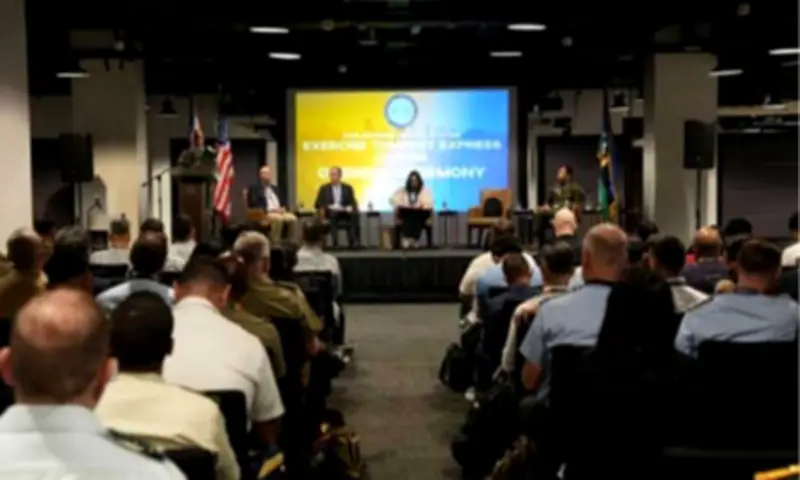
The Armed Forces of the Philippines (AFP) and the United States Indo-Pacific Command (USINDOPACOM) have officially commenced "Exercise Tempest 41-2026" to bolster disaster response capabilities. The opening ceremony took place on Wednesday, June 3, 2026, at the Manila Marriott Hotel in Pasay City, with participating nations joining the drills that will run until June 11.
Strengthening Disaster Preparedness
The exercise aims to enhance disaster response planning, improve interoperability, and refine coordination during humanitarian assistance and disaster response (HADR) operations, according to AFP public affairs office chief Col. Xerxes Trinidad. In a statement released on Friday, Trinidad emphasized the importance of the multinational collaboration.
"Exercise Tempest" is conducted under the Multinational Planning Augmentation Team (MPAT) Program, an international initiative established in 2000 to improve military coordination and crisis response in the Asia-Pacific region. MPAT consists of a cadre of skilled military planners from 31 nations, including the Philippines, United States, Japan, South Korea, Singapore, United Kingdom, France, Canada, Germany, and New Zealand.

Multinational Participation
Trinidad noted that the exercise brings together representatives from 17 MPAT nations and 31 MPAT members, along with humanitarian organizations and civilian agencies. The primary goals are to strengthen disaster response planning, enhance interoperability, and improve coordination during HADR operations.
The AFP's involvement is crucial, as the military serves as a key member of the National Disaster Risk Reduction and Management Council and leads the search, rescue, and retrieval cluster. The drill also highlights the AFP's role in advancing a whole-of-government approach to disaster management.
"The exercise underscores the AFP's commitment to building resilient partnerships and strengthening regional cooperation in humanitarian assistance and disaster response, ensuring participating nations are better prepared to respond collectively to complex emergencies and natural calamities," Trinidad said.