Typhoon Tino's Wrath: A Month's Rain in Hours
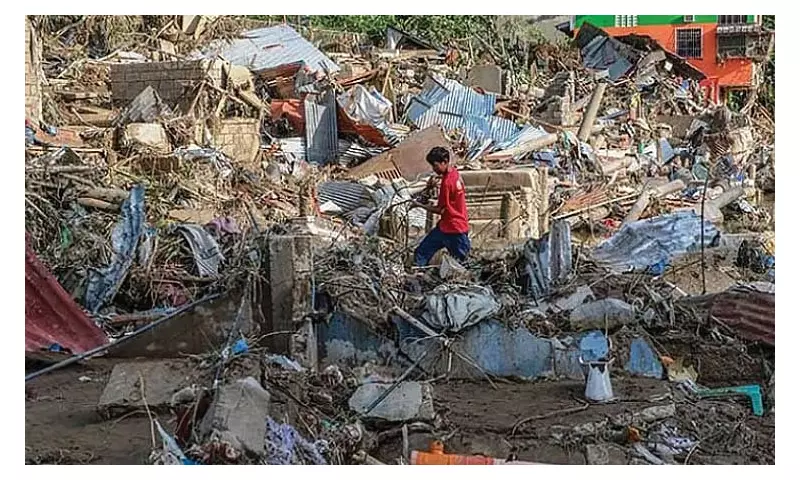
A resident walked past the shattered remains of homes in Sitio Lower Common, Barangay Bacayan, Cebu City, a stark scene of destruction left after the Butuanon River overflowed. This devastation was caused by the fierce onslaught of typhoon Tino on Tuesday, November 4, 2025.
The storm delivered a catastrophic amount of rainfall, a volume that would normally take a month to fall, in just a few hours. This event drew immediate and chilling comparisons to the devastating typhoon Ruping from 1990.
Record Rainfall and Historical Context
Oscar Tabada, the former director of the Philippine Atmospheric, Geophysical and Astronomical Services Administration (Pagasa) in Visayas, provided critical data during a press briefing. He reported that on November 4, 2025, typhoon Tino unleashed a staggering 203 millimeters (mm) of rainfall. This figure is alarming as it far exceeds the region's entire usual monthly average of just 130 mm.

Tabada made these remarks at the event "Disasters in the Visayas From the Spanish Period to Modern Times," which was held at Palm Grass The Cebu Heritage Hotel on Saturday, November 22. The gathering brought together experts from geology, history, and meteorology to analyze how natural disasters have continuously shaped the Visayan region.
The expert also provided a crucial classification for these storms. He explained that both typhoons Tino and Ruping are considered "wet storms," known for bringing significant rainfall alongside lightning. This contrasts with typhoons like Yolanda and Odette, which were classified as "dry storms" that produce thunder and lightning with little precipitation reaching the ground.
Climate Change and the Rising Human Cost
Tabada highlighted a grim connection between the two disasters, despite the 35 years separating them. Both resulted in significant loss of life, a trend that underscores the growing impacts of climate change.
The official numbers are sobering. As of November 17, the Office of the Civil Defense reported that the death toll from typhoon Tino had risen to 269. The province of Cebu was the hardest hit, recording the highest number of fatalities at 150.
Climate change is contributing to stronger and more frequent typhoons in the Philippines, Tabada stated. He elaborated that shifts in global weather patterns are making storms more intense than they were in previous decades. Human-driven activities, such as unchecked quarrying and tree cutting, continue to amplify these destructive effects, making communities more vulnerable.
A Call for Action and Modernization
In light of these escalating threats, the former Pagasa chief stressed the urgent need for comprehensive countermeasures. He emphasized the importance of:
- Proper hazard mapping and effective land-use planning.
- Ongoing community-based disaster preparedness education.
- Upgraded and more reliable early warning systems for the public.
He also highlighted a critical gap in the country's defenses: the need to modernize the national radar network. Tabada pointed out that the existing systems, some of which are over 17 years old, suffer from reduced accuracy, hindering the ability to predict and track storms with the precision required to save lives.