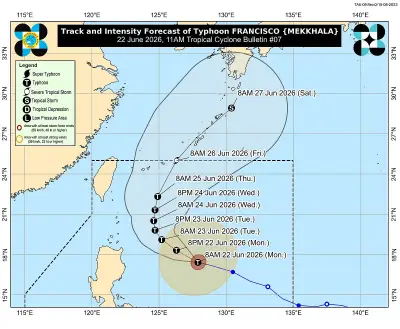
Typhoon Uwan has left a trail of devastation in Central Luzon, with the cost to the region's agricultural sector skyrocketing to over ₱1.8 billion. The staggering financial impact was confirmed in the latest report released by the Regional Disaster Risk Reduction and Management Council (RDRRMC) on the morning of Sunday, November 16, 2025.
Breaking Down the Billion-Peso Damage
The council's bulletin revealed that the total cost of destruction to crops and vital agricultural infrastructure has reached a precise ₱1,807,425,204.50. This colossal figure underscores the severe blow dealt to the food production and livelihood backbone of Central Luzon.
Provincial Losses: A Closer Look at Bataan and Bulacan
The provinces of Bataan and Bulacan bore the brunt of the typhoon's fury, suffering immense losses across various agricultural sectors.

In Bataan, the damage was widespread. The rice sector was hit hard with losses amounting to ₱24.7 million. Corn farmers faced a setback of ₱19.3 million, while cassava cultivation suffered ₱371,978.50 in damages. The province's high-value crops, a critical source of income, incurred a massive ₱44.6 million loss, and the livestock sector recorded damages of ₱73,000.
Neighboring Bulacan also reported significant agricultural devastation. Rice farmers there saw damages valued at ₱71.9 million. Other affected commodities included corn (₱62,884.72), cassava (₱120,000), and high-value crops (₱21 million). The livestock industry in Bulacan also suffered, with losses estimated at ₱47,500.
Aftermath and Regional Impact
The unprecedented scale of these agricultural losses highlights the vulnerability of the farming sector to extreme weather events. The damage to crops and infrastructure not only represents an immediate financial crisis for thousands of farmers but also poses a significant threat to regional food security and local economies. The full recovery of Central Luzon's agricultural heartland from this disaster is expected to be a long and challenging process.