Asia Pacific Leaders Sound Alarm on Bioplastics Expansion
Environmental leaders, community advocates, and policy experts from across the Asia Pacific region gathered online on January 22 for a critical discussion titled Fire or Ice: Growth of Bioplastics in the Asia Pacific. This event delved into the regulatory, policy, and investment trends fueling the rapid expansion of bioplastics, while examining their profound implications for communities, climate change, and human health.
Risks of Unchecked Growth and False Narratives
Panelists issued a stark warning that the unchecked growth of bioplastics could replicate the environmental and social damages associated with conventional plastics. This risk is particularly high when bioplastics are promoted as a quick-fix solution rather than integrated into a broader system of sustainable change.
Arpita Bhagat, Plastic Policy Officer at GAIA Asia Pacific and the panel moderator, emphasized the necessity of moving beyond simple material substitution. “Bioplastics are often framed as sustainable by default, whereas the material combinations keep evolving without minimum design standards or safe safeguards,” she stated. “Without chemical transparency, strong regulations, and a clear focus on the reduction of single-use material, they are another false narrative that wastes precious resources and delays real action. Therefore, our governments must reevaluate their policy incentives for bioplastics promotion.”

Regional Production and Policy Challenges
Participants scrutinized the scale of bioplastics production in Asia, noting that the region has already emerged as the largest producer and exporter globally. Experts cautioned that this rapid expansion is being driven more by market incentives than by robust environmental safeguards.
Pichmol Rugrod, Plastic-Free Future Project Lead of Greenpeace Thailand, highlighted how national policies can inadvertently reinforce harmful narratives. “Thailand is promoting itself as a biodegradable hub through investment incentives and policy frameworks like the bio-circular-green economy. But this does not address plastic pollution at its root,” she explained. “Plastic packaging, even when labeled biodegradable, does not truly biodegrade in real-world conditions and therefore is not the real solution. Reuse and refill systems are.”
Community Perspectives and Indigenous Knowledge
The discussion also centered on the perspectives of Indigenous and frontline communities. Rufino Varea, Director of the Pacific Indigenous Climate Action Network (PICAN) in Fiji, shared insights from the Global South. “Bioplastics are a regrettable solution that only creates a false sense of security about addressing the plastic crisis,” he said. “They do not fit our Global South realities. We already face disproportionate waste burdens threatening our ecosystems, affecting marine food webs, and causing toxicity to our waters. Our Indigenous knowledge systems have the heritage of organic materials that are inherently circular, regenerative, and in harmony with the economy.”
Health, Environmental, and Climate Concerns
Chemical safety and environmental health risks were raised as major concerns during the panel. Jam Lorenzo, Deputy Executive Director of BAN Toxics, emphasized that bioplastics are not inherently safer. “Studies show that more than half of tested bioplastics contain toxic chemicals similar to those found in conventional plastics, including substances like lead and cadmium when production is poorly regulated,” he noted. “Our position is simple. No data, no market.”
Experts also flagged agricultural and food safety impacts. Mageswari Sangaralingam, Chief Executive of the Consumers Association of Penang (CAP) in Malaysia, pointed to growing evidence of harm. “Bioplastics are marketed as eco-friendly, but they fragment, break down into microplastics, and release chemical additives that contaminate soil and enter food systems,” she warned. “A 2025 study by Jing Liu found that starch-based plastic is potentially as toxic as petroleum-based plastic. We must put a blanket ban on using bioplastics for mulching films.”

Doun Moon, Policy and Research Officer of the Global Alliance for Incinerator Alternatives (GAIA), cautioned against assuming bioplastics are a climate solution. “Switching from petroleum-based plastics to bioplastics does not automatically cut emissions, as there is a large amount of GHG emissions associated with land use, material production, and end-of-life treatments,” she explained. She cited South Korea’s experience, where the bioplastics industry is growing slowly despite government encouragement and attempts to pass a promotional bill.
Regulatory Gaps and Call for Action
Legal and regulatory gaps were also highlighted. Madhuvanthi Rajkumar, an independent consultant from India working at the intersection of law, public policy, and rights-based advocacy, mentioned, “While we are seeing unprecedented policy momentum (in India and Asia) in favour of bioplastics, the primary risk is substituting one set of problems for another while believing we've solved the crisis.” She added, “Bioplastics come with the same array of negative environmental, social, and health impacts as conventional fossil-fuel-based plastics, in some ways even worse, while giving a false sense of sustainability that increases consumption and waste generation. It’s not even old wine in a new bottle; It’s old wine in an old bottle but with a ‘green’ label!”
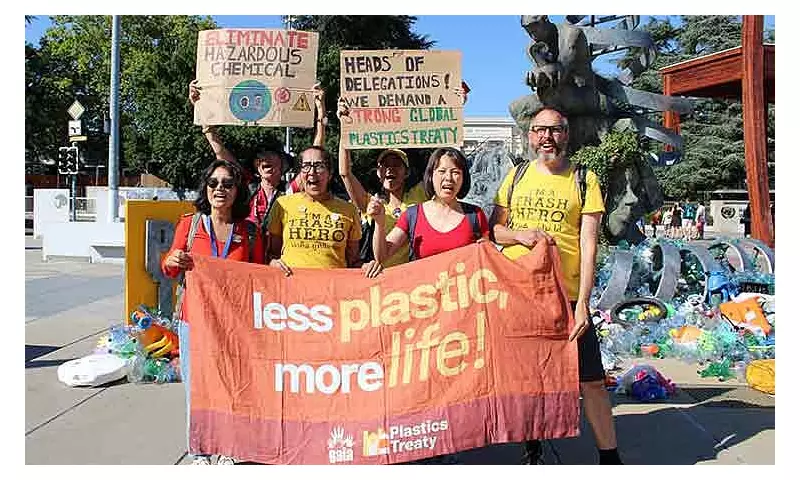
The panel concluded with a unified call for action. Speakers emphasized that the Global Plastics Treaty must prioritize binding measures on plastic production reduction, toxic chemicals, and real reuse-based systems, rather than legitimizing alternative single-use materials. The focus must remain firmly on promoting reuse and refill systems over the development of new single-use materials.