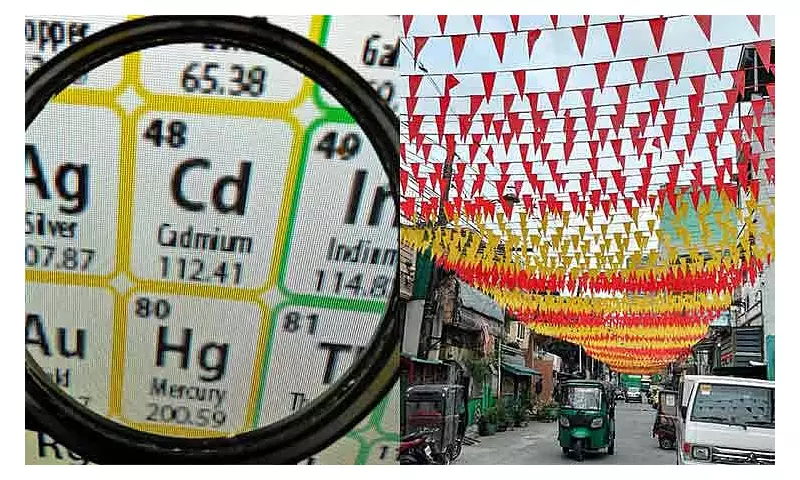
The vibrant plastic flags, or banderitas, that adorn streets during Philippine fiestas are hiding a dangerous secret. The EcoWaste Coalition, a prominent environmental watchdog, has issued a stark warning after discovering high levels of toxic cadmium in these popular decorations, with some samples exceeding international safety limits by a shocking 336%.
Alarming Levels of a Carcinogen Found
In a chemical screening conducted in January 2026, the group tested new plastic sheets bought for P38 per meter in Binondo, Manila, commonly used to make banderitas for celebrations like the Feast of the Santo Niño. Using a handheld X-Ray Fluorescence (XRF) analyzer, they detected cadmium in all nine colors examined.
The results were deeply concerning. Cadmium levels ranged from 224 parts per million (ppm) to 336 ppm. This far surpasses the maximum limit of 100 ppm set by the European Union's Restriction of Hazardous Substances (ROHS), which banned cadmium in plastics in 2011. The green, orange, and violet colors showed the highest concentrations at 336 ppm, 320 ppm, and 315 ppm, respectively.

Why is Cadmium in Plastic Flags?
Cadmium is a heavy metal used as a stabilizer in manufacturing polyvinyl chloride (PVC) plastic. It prevents the plastic from degrading. However, the World Health Organization (WHO) classifies cadmium as a major public health concern. It is a cumulative toxin linked to severe health issues, including kidney damage, bone weakening, respiratory problems, and increased risk of cancers such as kidney, lung, and prostate cancer.
The EcoWaste Coalition emphasizes that the threat is twofold. First, there is the risk of exposure to workers and consumers. Second, and equally critical, is the environmental pollution when these disposable plastics are discarded.
From Fiesta to Forever Pollution
Most plastic banderitas end up dumped, landfilled, or burned. According to the United Nations Environment Programme, cadmium products in developing countries typically mix with general waste. When landfilled, these plastics break down into microplastics and nanoplastics, leaching cadmium into the soil and water.
If incinerated, PVC banderitas can release highly toxic dioxins. This creates a cycle of pollution that contaminates the environment and re-enters the food chain, posing long-term health risks to communities.
This is not an isolated finding. The group's previous tests found cadmium in PVC school bags, raincoats, and election tarpaulins. For instance, campaign tarps from the May 2025 mid-term elections contained cadmium levels from 219 ppm to 736 ppm.
A Call for Action During Zero Waste Month
With January observed as Zero Waste Month under Presidential Proclamation 760, the EcoWaste Coalition is urging decisive action. They call for stronger policies to identify and phase out toxic chemicals in plastics, enforce transparency in manufacturing, and ultimately cap plastic production to prevent pollution.
The discovery turns a symbol of joy into a warning. It highlights the urgent need to shift towards non-toxic, sustainable alternatives to protect public health and the environment from hazardous chemicals.