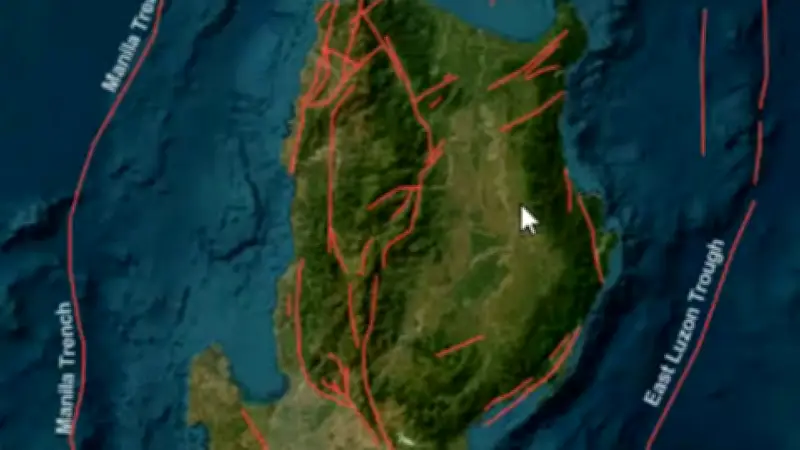
Researchers have discovered four new fault zones under the sea off the western part of Luzon. The study was led by experts from the UP Marine Science Institute (UP MSI), in collaboration with DOST-PHIVOLCS and UP-National Institute of Geological Sciences (UP-NIGS).
New Faults Are Branches of the Philippine Fault Zone
The newly identified fault zones serve as branches extending from the main Philippine Fault Zone. One of these branches lengthens and reaches as far as the Manila Trench, an active undersea trench that could be a source of strong earthquakes and tsunamis. This fault zone appears to split the Manila Trench into two separate sections.
Formation Due to Tectonic Forces
These new fissures formed because of the intense pressure on the Philippines as it is wedged between two large tectonic features. The country is pushed by the Palawan Microcontinental Block from the southwest and by the Philippine Rise (formerly Benham Rise) from the northeast.

Importance for Hazard Assessment
Mapping these new faults will help scientists better determine where future strong earthquakes may strike. The study contributes to more accurate hazard assessments, improving the preparedness of the government and the public against the threat of earthquakes and tsunamis in Luzon.