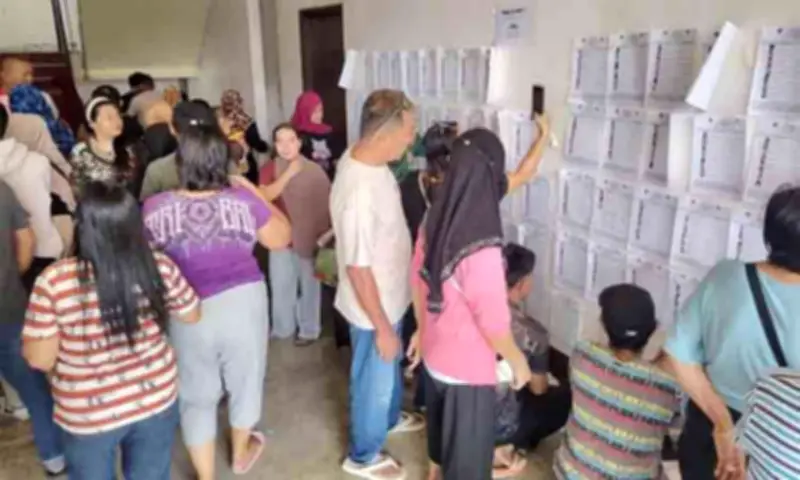
The Commission on Elections (Comelec) on Monday declared the June 27 simulation exercises for the automated election system (AES) used in the upcoming Bangsamoro parliamentary elections a success. The mock polls were conducted in Cotabato City, Sultan Kudarat, Maguindanao del Norte, and Bongao, Tawi-Tawi, as part of preparations for the September 14 first-ever regular parliamentary elections in the Bangsamoro Autonomous Region in Muslim Mindanao (BARMM).
Perfect data transmission and voter satisfaction
Comelec Chairman George Garcia reported that the data transmission during the mock elections was flawless. "Our transmission of data was perfect and without interruption," Garcia said, adding that participants expressed satisfaction with the process. The National Movement for Free Elections (Namfrel) and the Institute for Autonomy and Governance, both election watchdog NGOs in BARMM, corroborated Garcia's assessment.
According to the Comelec Bangsamoro Parliament Elections Monitoring Center, a total of 500 voters took part in the simulation, with 50 voters per clustered precinct. Voting took place from 7 a.m. to 10 a.m. on June 27.

Voter experience and transparency
Abdull Tolondatu, a voter in Barangay Kalanganan, Cotabato City, praised the simplicity of the process. "We are satisfied, happy to see the faces of our candidates in the official ballot. The process is not complex, it’s simple," he said. Garcia noted that election results were transmitted to the servers of Comelec, dominant majority and minority parties, media, the Parish Pastoral Council for Responsible Voting, and Namfrel within a short period.
Upcoming BARMM parliamentary elections
The first regular BARMM parliamentary elections are scheduled for September 14 and will use the automated election system unless the Supreme Court orders otherwise, following petitions challenging the validity of regional laws governing the exercise. There are 2,393,530 registered voters in BARMM, who will cast ballots in 1,186 voting centers across the region's 2,185 villages. Voters will elect 32 parliamentary district representatives, 40 political party nominees, and eight sectoral representatives.