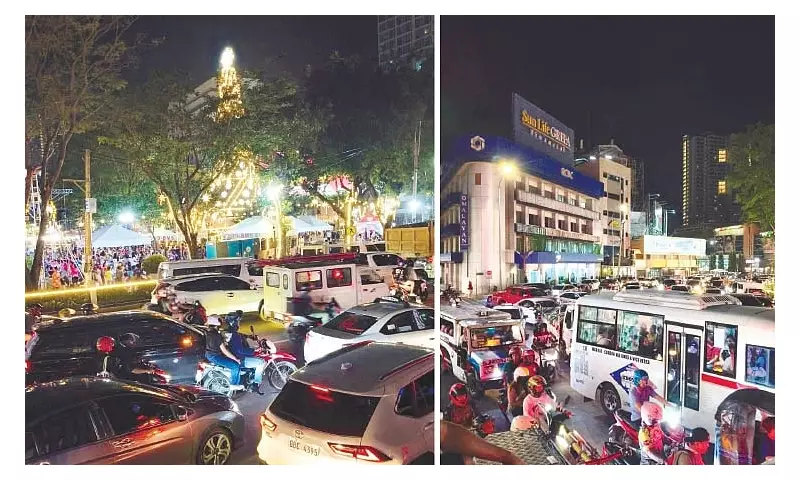
Motorists and commuters in Metro Cebu are facing severe travel delays as the holiday season peaks, with authorities warning that gridlock will intensify through December 23, 2025.
Perfect Storm of Congestion Factors
The current traffic surge is driven by a collision of events. The traditional Christmas rush, featuring office parties, shopping trips, and family visits, overlaps with an extended school calendar. Recent earthquakes and typhoons forced class suspensions earlier in the year, pushing school sessions deeper into December. This has kept thousands of private vehicles, school service vans, and public utility vehicles on the road longer than usual.
Adding to the crunch are early preparations for the Sinulog Festival in January. Cebu City Mayor Nestor Archival noted that roughly 100,000 vehicles now use city roads daily, a volume that overwhelms capacity. Mondays and Fridays are particularly difficult as people maximize long weekends.

Misa de Gallo and Regional Spillover Worsen Gridlock
From December 16 to 24, the traditional Misa de Gallo (Dawn Mass) creates early morning bottlenecks. Roads around major parishes see crowds as early as 3 a.m., compressing traffic into normally lighter hours.
Cebu City Councilor Winston Pepito, transportation committee chairman, stressed that congestion is a "regional problem." Spillover traffic from neighboring cities like Mandaue, combined with ongoing roadworks and a growing number of vehicles, worsens conditions inside Cebu City. Key routes such as Osmeña Boulevard, Sanciangko Street, and the Cebu South Road are experiencing much longer travel times.
Mandaue City Feels the Pinch
The situation is mirrored in neighboring Mandaue City. Hyll Retuya, head of the Traffic Enforcement Agency of Mandaue, reported intensified congestion along major corridors like UN Avenue, MC Briones Street, AC Cortes Avenue, and areas near Pacific Mall. The city has reinforced personnel and adjusted duty hours to manage the surge.
Mitigation Efforts and Realistic Expectations
Mayor Archival acknowledged that congestion during Christmas is largely "unavoidable" due to the natural surge in people's mobility for worship, shopping, and gatherings. The city's strategy focuses on mitigation rather than unrealistic restrictions.
Current measures include:
- Strict enforcement against illegal parking and obstructions on major roads.
- Adjusting traffic signal timing at critical intersections.
- Deploying additional traffic personnel and implementing modified traffic flow schemes.
- Banning large trucks during morning peak hours, allowing night travel instead.
Despite these efforts, officials admit that weather disturbances, accidents, or last-minute events could overwhelm plans. They advise the public to:
- Avoid unnecessary travel.
- Use alternative routes.
- Travel outside peak hours when possible.
- Allow extra time for essential trips.
Traffic is expected to remain heavy until after Christmas, ease slightly toward year's end, and then build up again as Sinulog preparations intensify in January. For now, patience and cooperation are deemed critical as residents navigate the seasonal reality of holiday gridlock.